 EN
EN

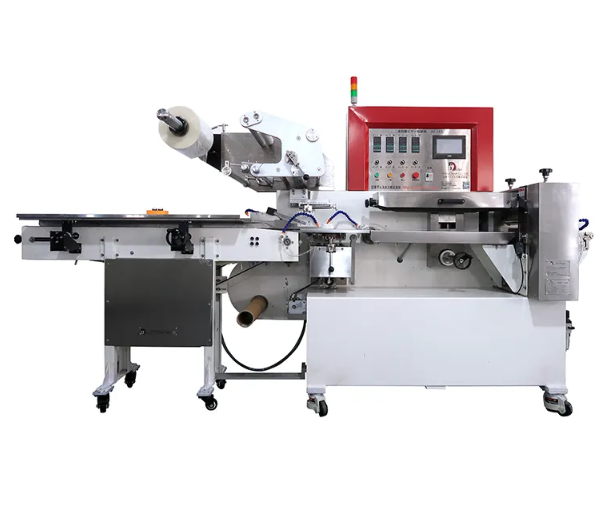
Understanding CE Certification for Fully Automatic Packaging Machines
Machinery Directive 2006/42/EC: The Legal Foundation
The Machinery Directive 2006/42/EC sets out strict safety rules for all kinds of industrial equipment, including those fully automated packaging machines sold within the European Economic Area market. According to the directive, machinery basically means any collection of connected parts built for a particular purpose. Manufacturers must conduct thorough risk assessments, implement proper hazard controls, and follow what they call Essential Health and Safety Requirements or EHSRs for short. These requirements address things like how well the machine is put together, whether the control systems work reliably, if maintenance access is possible, and most importantly, how to prevent dangers like getting caught in moving parts or crushed by heavy components. To meet compliance standards, companies need to create detailed technical documentation, produce an official EU Declaration of Conformity document, and apply that CE mark only after checking everything matches up with recognized standards like EN ISO 12100 for risk assessment and EN ISO 13849 regarding safety controls. Machines that don't comply simply cannot be sold legally anywhere in the EEA. Companies caught violating these regulations face serious financial consequences, with fines potentially reaching half a million euros per single infraction.
EN 415-10: Key Safety Standard for Fully Automatic Packaging Machinery
EN 415-10 is the primary harmonized standard for packaging machinery, translating the Machinery Directive’s broad EHSRs into actionable, industry-specific safety provisions. It mandates integrated safeguards tailored to high-speed, automated operations, including:
- Interlocked guards that halt motion when access doors are opened
- Emergency stop actuators positioned no more than 0.5 m from any operator station
- Light curtains or laser scanners to detect personnel intrusion near hazardous zones
- Acoustic engineering measures ensuring noise emissions remain below 85 dB(A)
Meeting EN 415-10 standards gives equipment a presumed compliance status with essential health and safety requirements. For design validation, companies need to stick to established protocols. The EN ISO 13849-1 standard specifically addresses control system performance levels. Most applications where there's a real danger of serious injuries require at minimum Performance Level d according to these guidelines. Things get trickier when new safety tech comes into play. Technologies like AI powered motion detection systems or robots working alongside humans often don't fit neatly within current regulations. That's when getting approval from an official Notified Body becomes absolutely necessary for market access.
How Manufacturers Achieve CE Compliance for Fully Automatic Packaging Machines
Step-by-Step Compliance Workflow: Risk Assessment to DoC
Achieving CE marking for a fully automatic packaging machine follows a defined, sequential workflow anchored in the Machinery Directive:
- Hazard Identification & Risk Assessment: Systematic analysis of mechanical, electrical, thermal, ergonomic, and noise-related hazards across all operational modes—including setup, cleaning, and maintenance.
- Risk Reduction Implementation: Application of the three-tier hierarchy—elimination, safeguarding (e.g., interlocks, light curtains), and information for use (e.g., warning labels, manuals)—in alignment with EN ISO 12100.
- Harmonized Standard Integration: Adoption of EN 415-10 for packaging-specific requirements and EN ISO 13849 for control system validation, supported by test reports and design calculations.
- Technical Documentation Compilation: A structured file containing schematics, risk assessment records, test results, user instructions, and declarations of conformity for subcomponents (e.g., motors, PLCs).
- Conformity Assessment & DoC Issuance: Final verification that all EHSRs are met, followed by signing of the EU Declaration of Conformity—a legally binding statement affirming compliance before CE marking is applied.
Omission or inadequacy at any stage invalidates certification and exposes manufacturers to regulatory sanctions and liability exposure.
When a Notified Body Is Required: Annex IV Scenarios
Third-party involvement via an EU-recognized Notified Body is mandatory under Annex IV of the Machinery Directive for machinery presenting heightened risk profiles. For fully automatic packaging machines, this typically applies to systems incorporating:
- Robotic palletizing cells with dynamic reach envelopes
- Hydraulic or pneumatic compression units exceeding 50 kN force
- Integrated vision-guided motion control without established safety certification pathways
Safety assessments by Notified Bodies cover critical areas like the architecture behind safety controls, failure mode effect analysis or FMEA for short, plus checking how effective redundancy really is. These evaluations offer independent confirmation when companies can't fully rely on their own certifications. According to Global Compliance Journal from last year, around 67% of significant automation improvements in packaging operations end up needing an Annex IV assessment. This statistic highlights why getting involved with certified organizations right at the design stage makes so much sense for manufacturers wanting to avoid costly delays later on.
Real-World Impact of CE Certification on Fully Automatic Packaging Machines
Market Access, Liability, and Customer Trust in the EU
Getting CE certification is basically required if anyone wants to put fully automatic packaging machines onto the EU market. Machines without this certification simply can't be sold, installed, or run anywhere in those 27 EEA countries. And companies that don't comply often end up paying big bucks too. The Ponemon Institute reported average recall costs around €670k back in 2023. But there's another angle beyond just meeting regulations. Companies that maintain solid CE documentation actually cut down their legal risks significantly. Manufacturers who keep detailed technical files aligned with industry standards experience about a two thirds drop in successful negligence claims after accidents happen. For people buying equipment and distributors alike, the CE mark acts like a green light showing compliance with EN 415-10 rules and other machinery directives. Recent surveys from 2024 show most industrial buyers are pretty strict about this stuff too. Around 89% of procurement professionals insist on seeing proper CE paperwork before even considering new equipment purchases, mainly because they want assurances about regulations and also need to manage risks throughout their supply chains.
Case Insight: Integrated Fully Automatic Carton Line Certification
A global packaging equipment manufacturer accelerated time-to-market for its integrated cartoning line by embedding CE compliance into the development lifecycle—not as a final checkpoint, but as a design driver. Initial certification testing revealed critical gaps in:
- Interlock synchronization between robotic loading arms and downstream sealing modules
- Inconsistent emergency stop placement relative to operator walkways and maintenance access points
After going through a major redesign, the new product line saw approval times jump by around 40% across several European Union countries' regulatory bodies. This meant facilities saved roughly three to four weeks on average before getting deployed. What really set this apart was the detailed technical documentation we put together. We aligned everything with EN 415-10 standards and got proper validation under EN ISO 13849-1. This became our secret weapon when bidding for contracts. A big pharmaceutical company actually chose us because they needed complete traceability for their safety validations according to EU GMP Annex 15 requirements. Our thorough paperwork made all the difference in winning that important deal.
FAQ
What is CE certification for fully automatic packaging machines?
CE certification is a mandatory conformity marking for certain products sold within the European Economic Area. It ensures the machinery meets high safety, health, and environmental protection requirements set by the Machinery Directive 2006/42/EC.
Why is EN 415-10 important for packaging machinery?
EN 415-10 is a harmonized standard that provides specific safety guidelines tailored for packaging machinery, ensuring compliance with broader health and safety requirements.
When is a Notified Body required for CE certification?
A Notified Body is required when the machinery presents heightened risk profiles, such as those involving robotic systems or high-pressure hydraulic units as laid out under Annex IV of the Machinery Directive.
What happens if a machine does not have CE certification?
Without CE certification, machines cannot be legally sold, installed, or operated in the EEA. Non-compliance can lead to significant financial penalties.