 EN
EN

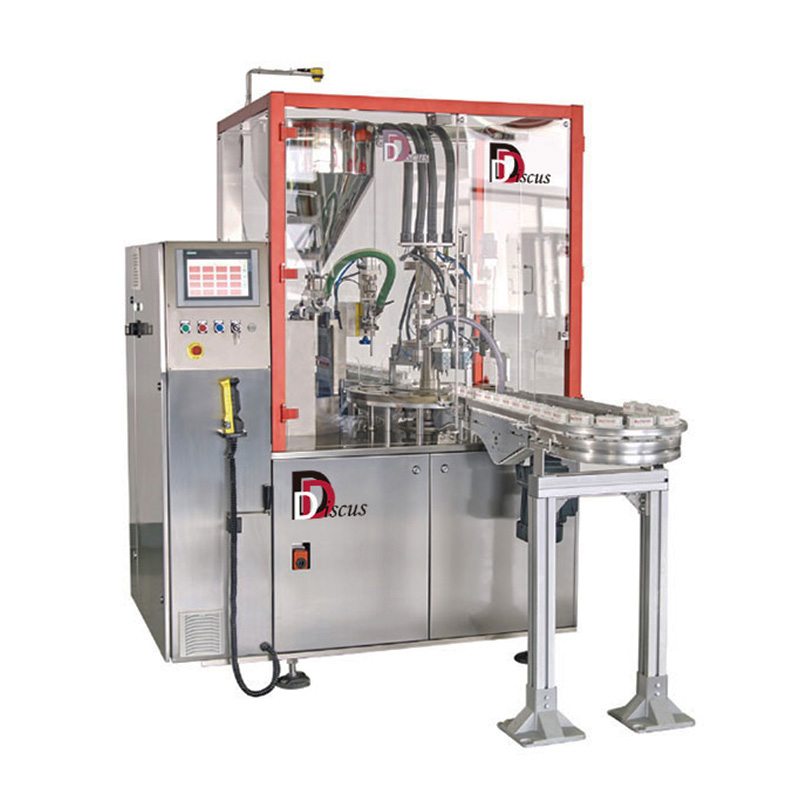
Performance and Precision: Key Features of a Cream Filling Machine
Modern cream filling machines achieve ±0.5% dosing accuracy through precision-engineered piston systems, ensuring uniform product distribution across thousands of units. This pharmaceutical-grade precision prevents costly overfills while maintaining formula integrity in sensitive skincare products.
Machine Automation and Accuracy to Minimize Human Error
PLC-controlled automation reduces manual intervention by 83% in high-speed operations, with touchscreen interfaces enabling real-time adjustments to viscosity parameters and filling volumes. Error-proof sensors automatically halt production when containers misalign, minimizing product waste.
Production Speed and Efficiency for High-Volume Cosmetic Manufacturing
Top-performing systems fill 120–400 containers per minute through multi-head configurations, with quick-change tooling allowing shift workers to reconfigure formats in under 15 minutes. This throughput supports batch sizes from 5,000 to 50,000 units without compromising accuracy.
Flexibility in Handling Different Bottle Sizes and Product Viscosities
Interchangeable nozzles accommodate container openings from 5mm to 50mm, while variable-speed pumps handle viscosities ranging from 500 cP lotions to 50,000 cP whipped butters. This adaptability enables manufacturers to switch between sunscreen sprays and dense night creams using the same base machine.
Understanding Core Features for Optimal Cream and Lotion Filling Machine Selection
Leading manufacturers combine these capabilities with CIP (Clean-In-Place) systems and recipe memory functions, allowing operators to store 200+ product parameters. This integration of precision, speed, and flexibility creates a 23% reduction in changeover times compared to conventional fillers.
Matching Machine Type to Production Needs: From Semi-Automatic to Multi-Head Systems
Semi-Automatic vs. Fully Automatic Lotion Filling Machines for Small to Mid-Scale Operations
Semi-automatic cream fillers sit somewhere between hand-operated equipment and full automation, which works well for shops running around 500 to 2000 products each day. Operators still need to put containers into place and start the cycle manually, though these machines typically hit about 1% accuracy when dispensing product. When production jumps above 3000 items per hour though, most companies switch to completely automated systems. These advanced setups come with built-in conveyor belts and those fancy PLC control panels, cutting down mistakes significantly. Some manufacturers report error rates drop roughly two-thirds when moving from semi-auto to fully automatic machines, depending on how clean their production lines are kept.
Multi-Head Filling Systems for Enhanced Throughput and Scalability
Multi-head configurations address production scalability challenges by enabling parallel filling of 4–16 containers simultaneously. A dual-head system can achieve 8,000 fills/hour for 50ml lotion tubes, while modular designs allow adding heads as demand grows. This flexibility minimizes retrofitting costs by 30–40% compared to replacing entire machines when scaling output.
Choosing the Right Filling Machine Type Based on Operational Scale and Demand
Consider three factors when selecting cream filling machines:
- Daily output: <500 units = manual; 500–3,000 = semi-automatic; 3,000+ = automatic
- Labor costs: Fully automatic systems reduce staffing needs by 2–3 workers per shift
- ROI horizon: Semi-automatic machines break even in 12–18 months vs. 24–36 months for high-end automatics
Businesses aligning machine types with demand projections achieve 22% higher profit margins than those prioritizing upfront cost savings alone.
Hygienic Design and Regulatory Compliance for Safe Cosmetic Filling
When selecting a cream filling machine, hygienic engineering and regulatory adherence are non-negotiable for product safety and market access. Modern systems prioritize contamination prevention through seamless, crevice-free surfaces and hermetically sealed components that block microbial ingress.
Sanitary Engineering and Sealed Systems to Prevent Contamination
Closed-loop filling mechanisms and polished internal geometries eliminate dead zones where residues accumulate. Automated lubrication-free actuators reduce particulate generation, critical for preservative-free formulations requiring ultra-clean environments.
Stainless Steel Construction for Durability and Compliance in Harsh Environments
Machines using 316L stainless steel withstand frequent sterilization cycles and acidic cleaning agents while maintaining structural integrity. This alloy’s corrosion resistance exceeds standard grades, meeting EHEDG and 3-A Sanitary Standards for pharmaceutical-grade cleanliness.
Ease of Cleaning and Maintenance to Meet Ongoing Hygiene Standards
Quick-release clamps and tool-free disassembly enable full equipment breakdown in under 15 minutes—42% faster than traditional bolt-on designs. Integrated Clean-In-Place (CIP) systems automate sterilization using 25% less water and detergents compared to manual methods.
Meeting GMP, FDA, and ISO Standards for Global Market Access
Compliance with GMP, FDA 21 CFR Part 11, and ISO 22716 isn’t optional for international distribution. These frameworks mandate:
| Requirement | Purpose | Verification Method |
|---|---|---|
| Material Certificates | Prove alloy compatibility with products | ASTM E290/E527 testing |
| Traceability | Track batch-specific cleaning cycles | RFID-enabled component logging |
| Airflow Validation | Confirm ISO Class 5 cleanliness | Particle counter measurements |
Third-party audited machines reduce inspection failures by 67% compared to self-certified equipment, while modular designs allow regional compliance retrofits as regulations evolve.
Evaluating Supplier Reliability and Long-Term Support
Technical Support, Warranty, and Service Responsiveness as Reliability Indicators
When selecting a cream filling machine supplier, prioritize partners offering minimum 24-hour response times for technical issues and comprehensive warranties covering critical components like pumps and seals. Leading suppliers now provide:
- Remote diagnostic tools for 30% faster troubleshooting
- Extended service contracts reducing unscheduled downtime by 58%
- Multi-language support teams for global operations
A 2023 Packaging Machinery Report found that 72% of cosmetic manufacturers rank real-time technical support higher than initial machine pricing when evaluating suppliers.
Supplier Expertise in Guiding Integration and Meeting Industry Standards
Top-tier suppliers demonstrate proven experience in aligning equipment with GMP guidelines and FDA-compliant workflows, ensuring seamless integration into existing production lines. Companies adhering to ISO 9001:2015 certification frameworks achieve 41% faster regulatory approvals compared to non-certified providers.
Case Study: How Top Suppliers Resolve Downtime and Maintenance Issues
A leading European skincare brand reduced filler-related production delays by 89% after partnering with a supplier implementing AI-driven predictive maintenance. Key results over 18 months included:
- 63% fewer valve seal replacements
- 22% improvement in batch consistency
- 12-hour average resolution time for critical failures
Short-Term Savings vs. Long-Term Costs: Balancing Price and Service in Supplier Selection
Basic semi-automatic fillers typically range between 28 thousand and 45 thousand dollars upfront. However, many facilities that focus on long-term savings find they actually spend about 45 percent less over five years because they need fewer spare parts stored onsite, their machines consume less power day to day, and they stay ahead of changing safety regulations. Looking at industry-wide maintenance records reveals something interesting too. Plants working with vendors who don't offer solid service contracts tend to rack up around 19k to 32k every year just fixing unexpected breakdowns. That kind of money adds up fast, especially when it's completely avoidable with proper planning.
Future-Proofing Your Investment: Scalability and Modular Design
Assessing Production Scalability to Align With Business Growth
Today's cream filling machines need to keep pace with changing production needs without forcing companies to replace entire systems. When facilities are looking at growth rates around 20 to 30 percent each year, they'd be wise to invest in equipment that can handle anywhere from double to quadruple their current throughput through upgrades like better controllers or adding more filling heads. Take a standard 4-head rotary filler for instance it can easily expand to 8 heads, which doubles production capacity all within the same space requirements. Many manufacturers find this step-by-step upgrade strategy saves them about two-thirds on initial investment costs instead of buying oversized machinery right away. Packaging automation experts have confirmed these cost savings in their industry research over recent years.
Modular and Retrofit-Ready Cream Filling Machines for Long-Term Adaptability
Modular designs dominate 87% of new cosmetic machinery installations, allowing manufacturers to:
- Add vision inspection systems for quality control
- Integrate IoT sensors for predictive maintenance
- Swap viscous product pumps for thinner serums
Retrofitting existing machines with servo-driven dosing modules cuts changeover times by 40% while maintaining ±0.5% volume accuracy. Look for suppliers offering 5-year compatibility guarantees on control interfaces to ensure seamless integration with future automation upgrades.
Table of Contents
- Performance and Precision: Key Features of a Cream Filling Machine
- Matching Machine Type to Production Needs: From Semi-Automatic to Multi-Head Systems
- Hygienic Design and Regulatory Compliance for Safe Cosmetic Filling
-
Evaluating Supplier Reliability and Long-Term Support
- Technical Support, Warranty, and Service Responsiveness as Reliability Indicators
- Supplier Expertise in Guiding Integration and Meeting Industry Standards
- Case Study: How Top Suppliers Resolve Downtime and Maintenance Issues
- Short-Term Savings vs. Long-Term Costs: Balancing Price and Service in Supplier Selection
- Future-Proofing Your Investment: Scalability and Modular Design