 EN
EN

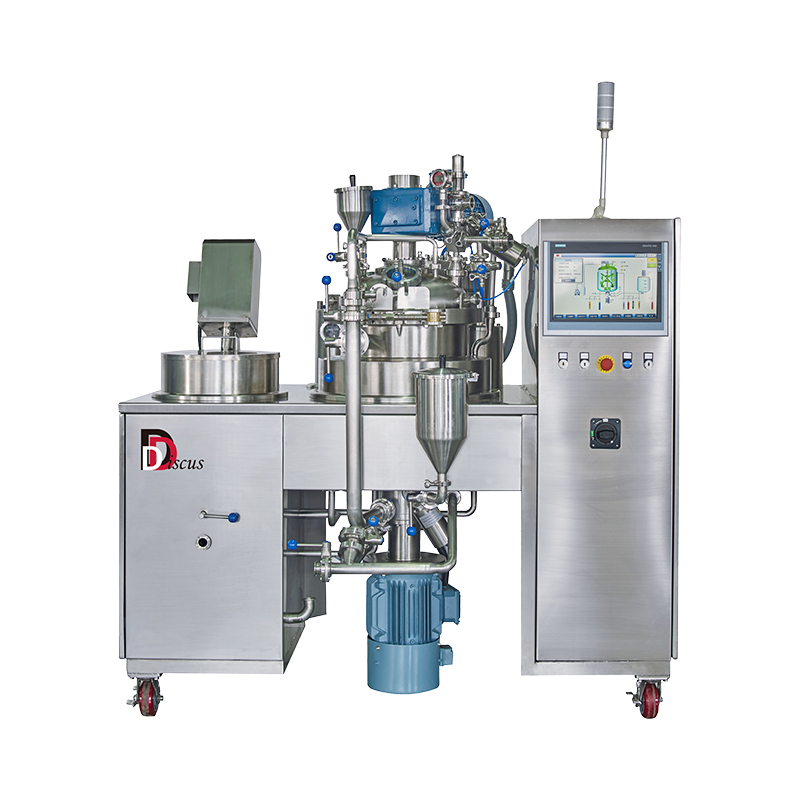
Understanding the Core Functionality of a Vacuum Homogenizer Mixer Machine
What Is a Vacuum Homogenizer Mixer Machine and How Does It Work?
Vacuum homogenizer mixers work by combining intense shearing action with powerful vacuum systems to produce emulsions without air bubbles. These machines typically feature rotor-stator mechanisms spinning at speeds between 15,000 and 30,000 revolutions per minute, paired with vacuum levels reaching down to about -0.095 megapascals. What this does is shrink particles to under 5 microns in size while getting rid of most of the trapped air content, usually around 85 to 95 percent. The combination of these two actions stops ingredients from oxidizing and separating out, something that matters a lot when making delicate products such as vitamin C based skincare solutions where stability is essential.
The Science Behind Vacuum Emulsification for Stable, High-Quality Formulations
Vacuum emulsification stabilizes products by eliminating oxygen exposure during mixing—a key factor in preserving antioxidants and volatile compounds. Recent studies demonstrate that this method achieves zeta potential values exceeding ±30mV, compared to ±10mV in atmospheric mixing, resulting in emulsions with 12–18 months of shelf stability versus 6–9 months.
Key Mechanisms: Air Removal and Deaeration in Cosmetic Mixing Processes
The vacuum system removes dissolved and entrapped air in three stages:
- Primary deaeration: Eliminates 70% of air bubbles within the first 5 minutes
- Secondary homogenization: Reduces remaining microbubbles to <50µm
- Final vacuum hold: Achieves 0.01% residual oxygen content
This staged approach prevents reincorporation of air during processing.
Data Insight: Reduction of Air Content by Up to 95% in Vacuum-Processed Emulsions
Independent tests show vacuum homogenizers reduce air content from 8.2% to 0.4% in silicone-based creams—a 95% decrease that correlates with a 60% reduction in microbial growth rates. Manufacturing trials confirm vacuum-processed lotions maintain consistent viscosity (±5%) for 24 months, outperforming traditional mixing methods by 300%.
Enhancing Product Quality by Preventing Oxidation and Eliminating Air Bubbles
Vacuum homogenizer mixer machines combat two primary causes of cosmetic degradation: oxidative damage and air-induced instability. By maintaining oxygen levels below 0.5% during mixing, these systems enable manufacturers to preserve sensitive actives while achieving pharmaceutical-grade product consistency.
How Air Bubble Removal Preserves Active Ingredients in Cosmetics
Entrapped air bubbles act as micro-reactors for oxidation, particularly damaging to antioxidants like vitamin E and unstable compounds such as ferulic acid. Vacuum homogenizers remove 92–95% of dissolved and trapped air, creating formulations where active ingredients retain 98% potency after 18-month storage.
Preventing Oxidation Through Integrated Vacuum Systems in Skincare Production
Traditional atmospheric mixing exposes formulations to 20.9% oxygen content—equivalent to 209,000 ppm. Modern vacuum homogenizers reduce this to <500 ppm oxygen, slowing oxidation rates by 83% compared to open-vent mixers. This oxygen depletion extends retinol efficacy by 4.5 months and reduces aldehyde formation by 91% in accelerated aging tests.
Case Study: Reduced Discoloration and Phase Separation in Vitamin C Serums
A 2024 formulation trial demonstrated vacuum-processed 15% vitamin C serums maintained <10% ascorbic acid degradation after 12 months vs. 42% degradation in atmospheric controls. Phase separation incidents dropped from 23% to 0% in thermal cycling tests, with chromatic stability improving by 60% on the CIELAB scale.
Trend: Rising Demand for Oxygen-Sensitive Actives Drives Vacuum Homogenizer Adoption
The global market for oxygen-labile cosmetic ingredients grew 22% CAGR since 2021, with 68% of manufacturers now requiring vacuum capability for prototypes. This shift aligns with recent packaging research showing products using oxygen-sensitive actives achieve 37% higher consumer preference scores when vacuum-processed.
Extending Shelf Life by Reducing Microbial Contamination and Product Degradation
How Lower Air Exposure Inhibits Microbial Growth in Final Products
The vacuum homogenizer mixers cut down on airborne contamination because they work in spaces where there's little oxygen around. Most bacteria we worry about, such as Staphylococcus and Aspergillus, need oxygen to grow and multiply. Research looking at ways to stop microbial growth has found something interesting too. When these machines remove about 85 to 90 percent of regular air from the mixing area, it makes bacteria much less likely to survive. The numbers drop around 70% when compared to normal mixing conditions. Beyond just stopping bad bacteria, this low oxygen setting helps keep plant based products from turning brown due to enzymes reacting. It also stops mold spores from getting active in products that don't have preservatives added. This is why many manufacturers prefer vacuum systems for sensitive ingredients.
Evidence from Accelerated Stability Testing: Longer Shelf Life with Vacuum Mixing
Third-party accelerated aging trials demonstrate vacuum-processed emulsions maintain pH stability 2.3x longer than conventionally mixed equivalents. A 12-month real-time study of hyaluronic acid serums showed vacuum homogenization reduced viscosity breakdown from 18% (atmospheric) to 4%, while preserving 92% of initial antioxidant potency versus 67% in oxygen-exposed samples.
Optimizing Vacuum Parameters: Duration and Pressure for Maximum Preservation
| Parameter | Thin Serums (-100 mbar) | Thick Creams (-950 mbar) |
|---|---|---|
| Optimal Duration | 8–12 minutes | 18–22 minutes |
| Microbial Reduction | 89% | 97% |
| Lower pressure (-980 mbar) and extended mixing cycles prove critical for water-in-oil formulations, achieving 99.5% air expulsion to prevent lipid peroxidation in CBD-infused topicals. |
Achieving Superior Texture and Consistency Through Advanced Vacuum Homogenization
Creating Smooth, Grain-Free Formulations with Unsurpassed Homogenization
Vacuum homogenizer mixers help manufacturers get rid of those pesky air bubbles and create emulsions with particles smaller than 1 micrometer. This size matters because anything bigger can make serums and creams feel gritty on the skin. When companies apply vacuum pressure around -0.095 MPa while mixing, they stop that annoying microfoam from forming which regular mixers just can't handle. According to research published by IFSCC last year, lotions made using this vacuum technique had about 89% fewer surface flaws than what comes out of traditional equipment. The difference is noticeable too since smoother textures simply feel better when applied.
Improving Stability and Uniformity in High-Viscosity Creams
When using high shear vacuum homogenization with rotor speeds between 3,000 and 8,000 rpm, manufacturers can achieve really consistent matrix structures even in very thick creams that have viscosities over 50,000 cP. This process stops ingredients from separating out during storage on shelves, which is a big plus for product quality. Tests done under accelerated conditions showed that ceramide based products stayed stable for at least twelve months without any phase separation issues. According to the latest Emulsification Technology Report from 2024, companies switching to vacuum systems actually need about 30% fewer stabilizing additives while still keeping the desired texture characteristics intact throughout production runs.
Why Consumers Prefer the Silk-Like Feel of Vacuum-Processed Lotions
Sensory panels rate vacuum-homogenized products 23% higher in "spreadability" and "afterfeel" metrics compared to traditional equivalents. The complete air removal enables tighter molecular packing, creating formulations that absorb faster without greasy residues—a decisive factor in premium skincare markets.
Particle Size Reduction and Its Impact on Sensory Performance
Controlled particle distribution to 0.2–0.8 µm ranges optimizes both aesthetic and functional properties:
- Opacifiers: Achieve pearlescent effects at 0.7 µm without grittiness
- Active compounds: Maintain 98% bioavailability at 0.5 µm particle size
- Emollients: Deliver cushioning glide at 1.2 µm median diameter
This precision ensures each ingredient contributes optimally to both product performance and user experience.
Vacuum vs. Atmospheric Mixing: Evaluating Long-Term Benefits for B2B Manufacturers
Product Quality Gains: Vacuum Emulsification Outperforms Traditional Methods
Vacuum homogenizer mixers get rid of around 95% of the trapped air when making emulsions, which leads to formulations that resist oxidation better than what regular atmospheric systems can produce. Getting rid of this air is really important for things like cosmetics and medicines because it stops the active ingredients from breaking down over time. Some quick stability tests have shown that vitamin C serums made under vacuum conditions still hold about 92% of their strength after a whole year, while those mixed in open air only manage around 68%. Another benefit comes from how these machines handle high viscosity products. They cut down on those annoying microbubble issues by roughly 40%, so manufacturers see fewer problems with texture defects in their creams. This means less complaints about products separating or feeling gritty, which obviously saves money on returns and keeps customers happy.
Balancing Cost: Higher Initial Investment vs. Long-Term Yield and Quality ROI
While vacuum systems require 25–30% higher upfront costs than atmospheric mixers, they deliver ROI through three key mechanisms:
- Yield optimization: 98% first-pass success rate in sensitive emulsions vs. 82% with traditional methods
- Waste reduction: 15–20% lower material costs from eliminated rework batches
- Premium pricing: Brands command 18% price premiums for vacuum-processed "air-free" skincare products
Industry projections indicate 22% annual ROI for early adopters by 2025, driven by extended shelf life and compliance with stricter EU cosmetic preservation standards. Pharmaceutical manufacturers report 30% fewer recalls since switching to vacuum homogenizers, validating the long-term quality-cost equilibrium.
Table of Contents
- Understanding the Core Functionality of a Vacuum Homogenizer Mixer Machine
-
Enhancing Product Quality by Preventing Oxidation and Eliminating Air Bubbles
- How Air Bubble Removal Preserves Active Ingredients in Cosmetics
- Preventing Oxidation Through Integrated Vacuum Systems in Skincare Production
- Case Study: Reduced Discoloration and Phase Separation in Vitamin C Serums
- Trend: Rising Demand for Oxygen-Sensitive Actives Drives Vacuum Homogenizer Adoption
- Extending Shelf Life by Reducing Microbial Contamination and Product Degradation
-
Achieving Superior Texture and Consistency Through Advanced Vacuum Homogenization
- Creating Smooth, Grain-Free Formulations with Unsurpassed Homogenization
- Improving Stability and Uniformity in High-Viscosity Creams
- Why Consumers Prefer the Silk-Like Feel of Vacuum-Processed Lotions
- Particle Size Reduction and Its Impact on Sensory Performance
- Vacuum vs. Atmospheric Mixing: Evaluating Long-Term Benefits for B2B Manufacturers