 EN
EN

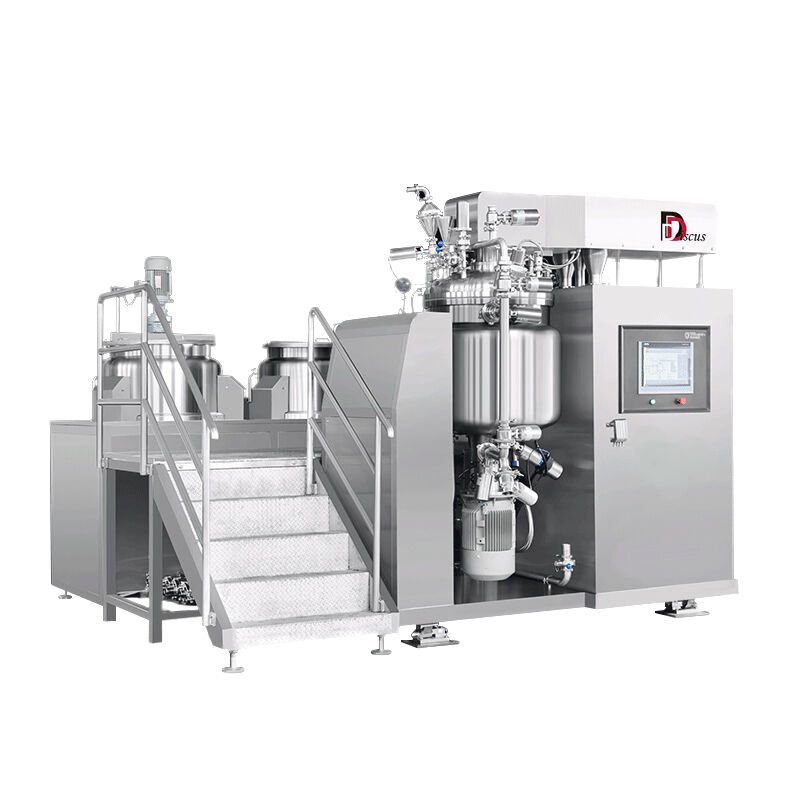
Why Cooling Is Critical During Vacuum Emulsification
Heat Generation Under High Shear and Vacuum Conditions
High-speed homogenizer heads—often rotating above 3,000 RPM in industrial vacuum emulsification machines—generate intense frictional heat, pushing temperatures beyond 50°C within minutes. Crucially, the vacuum environment eliminates convective cooling by removing air, trapping thermal energy inside the vessel. This dual effect accelerates temperature rise by 40–60°C, rapidly altering viscosity and destabilizing the emulsion matrix. Without immediate, targeted cooling, phase separation can begin before emulsification is complete.
Consequences of Inadequate Cooling: Emulsion Breakdown and Ingredient Degradation
Uncontrolled heating triggers irreversible physical and chemical failures. Oil and water phases separate visibly, yielding grainy textures or layered products. Heat-sensitive actives—including enzymes, vitamins, and botanical extracts—lose over 60% efficacy at just 55°C. Localized overheating in high-viscosity zones denatures proteins and accelerates oxidation, shortening shelf life by up to 90 days. Batch failure rates increase by 25% when temperature control deviates beyond ±3°C—raising waste, rework, and regulatory nonconformance risks.
Primary Cooling Methods in Vacuum Emulsification Machines
Jacket-Based Cooling: Water vs. Thermal Oil Circulation
Jacket-based cooling remains the industry-standard method for thermal management in vacuum emulsification systems. Coolant—either water or thermal oil—is circulated through an external vessel jacket to absorb process-generated heat. Water offers cost efficiency, ease of maintenance, and inherent safety but is limited to 0–100°C without pressurization. Thermal oil extends the operational range from –40°C to 200°C, making it essential for high-temperature formulations like silicone pastes and waxy emulsions; 68% of production lines handling such materials rely on thermal oil, per leading equipment manufacturers.
Integrated External Chillers: Sizing, Flow Rate, and Vacuum-Compatible Design
For thermally demanding applications—especially those involving high-shear, low-viscosity, or extended batch times—integrated external chillers provide critical supplemental capacity. Proper sizing requires calculating total heat load, typically estimated at 1.5× the shear motor’s rated kW output, to prevent thermal runaway. Vacuum-compatible chillers use hermetic seals and corrosion-resistant alloys (e.g., 316 stainless steel or Hastelloy) to preserve sterility and integrity under negative pressure. To ensure efficient heat transfer, coolant flow must exceed 3 m/s—achieving turbulent flow that prevents boundary-layer insulation. In pharmaceutical-grade installations, 92% include redundant pump systems to maintain uninterrupted cooling during continuous operation.
Precision Temperature Control for Emulsion Quality and Stability
Maintaining exact thermal conditions is foundational to emulsion stability, functionality, and regulatory compliance. Deviations exceeding ±2°C can trigger active ingredient degradation, crystallization, or premature phase inversion—particularly in complex, multi-phase systems like liposomal creams or enzyme-loaded serums.
PID-Controlled Multi-Zone Systems for Jacket and Scraper Cooling
Advanced PID-controlled multi-zone systems independently regulate coolant flow across distinct thermal domains: the outer jacket manages bulk fluid temperature and viscosity, while integrated scraper-cooled surfaces target heat buildup at the vessel wall—where viscous residues accumulate and resist mixing. This zonal precision eliminates cold spots and thermal gradients that compromise homogenization uniformity, enabling stable processing of shear-sensitive ingredients like cold-pressed botanicals or encapsulated peptides.
Real-Time Monitoring and Localized Overheating Prevention in Viscous Phases
Embedded, high-response thermocouples monitor temperature at 5–7 strategic points—including near the homogenizer head, vessel wall, and bottom discharge zone—to detect incipient hot spots in real time. When localized thresholds are exceeded—such as during wax-phase incorporation in liposomal creams—the system activates targeted coolant valves within 0.8 seconds. This rapid, spatially aware intervention prevents protein denaturation, microcrystallization, and batch-wide instability without disrupting shear dynamics or vacuum integrity.
FAQ
Why is cooling important in vacuum emulsification?
Cooling prevents overheating caused by high-shear operations and vacuum conditions, which can destabilize emulsions, degrade ingredients, and lead to batch failures.
What are the common cooling methods used in vacuum emulsification machines?
Common methods include jacket-based cooling (using water or thermal oil) and integrated external chillers.
What is the difference between water and thermal oil in cooling systems?
Water is cost-effective and safe but limited to temperatures between 0–100°C. Thermal oil allows for a broader temperature range (–40°C to 200°C), suitable for high-temperature formulations.
How does real-time monitoring help prevent overheating?
Embedded thermocouples track temperature at critical points, enabling rapid adjustments through targeted cooling to prevent localized overheating and maintain batch quality.
What is the role of PID-controlled multi-zone systems?
PID-controlled multi-zone systems precisely regulate temperature across different areas of the emulsification vessel, ensuring consistent temperature and uniform emulsification.
Table of Contents
- Why Cooling Is Critical During Vacuum Emulsification
- Primary Cooling Methods in Vacuum Emulsification Machines
- Precision Temperature Control for Emulsion Quality and Stability
-
FAQ
- Why is cooling important in vacuum emulsification?
- What are the common cooling methods used in vacuum emulsification machines?
- What is the difference between water and thermal oil in cooling systems?
- How does real-time monitoring help prevent overheating?
- What is the role of PID-controlled multi-zone systems?