 EN
EN

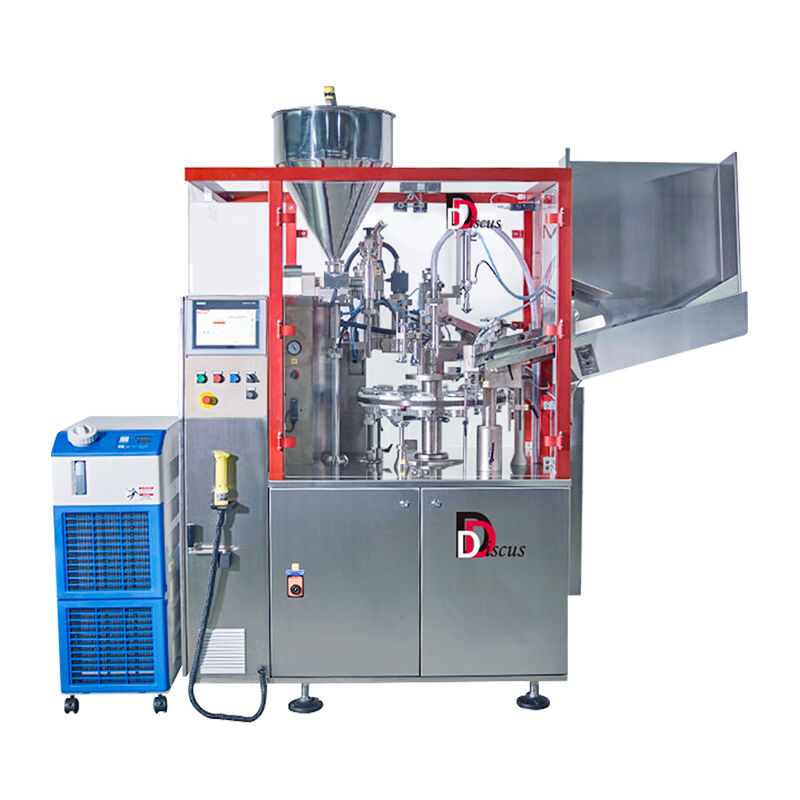
How Specialized Tube Filling Machines Enable Metal Tube Handling
Metal tubes demand engineering solutions beyond standard plastic or laminate formats. Specialized tube filling machines overcome these challenges through three critical adaptations:
Reinforced mechanical crimping, PID-controlled sealing, and servo-driven tube indexing
Rigid metal requires 3–5× greater crimp force than plastic—≥12 kN versus ≤4 kN. Machines achieve this with hardened steel jaws and hydraulic reinforcement. For consistent heat application on thermally conductive metals, PID (Proportional-Integral-Derivative) controllers maintain ±2°C sealing temperature accuracy. Servo-driven indexing eliminates misalignment during high-speed transfers—critical for dent-prone aluminum tubes.
Performance benchmarks with aluminum tubes
Validated systems achieve ≤8-second cycles while maintaining zero-leak seals. In stress tests, specialized machines sustained 12 kN crimp force on 16–25 mm aluminum tubes without deformation. This contrasts sharply with standard machines, where metal handling causes 23% more downtime, per 2024 packaging line efficiency studies from PMMI.
Key differentiators:
- Crimping: Hydraulic-assist systems vs. pneumatic-only
- Sealing: Dynamic temperature compensation vs. fixed-heat zones
- Handling: Precision servo-guided placement vs. conveyor friction feeds
The integration of these technologies enables metal tube filling at 98% operational efficiency—matching plastic tube throughput while eliminating material limitations.
Achieving Material Versatility: Plastic, Laminate, and Metal in One Tube Filling Machine
Manufacturers increasingly require tube filling machines that seamlessly transition between plastic, laminate, and metal tubes without compromising efficiency. While plastic tubes prioritize flexibility and cost, laminated varieties need balanced heat control to prevent delamination—and metal tubes (especially aluminum or stainless steel) demand reinforced crimping forces and specialized sealing techniques. Industry data confirms that machines capable of handling all three substrates reduce production downtime by consolidating lines and eliminating material-specific retooling—a critical advantage for high-mix operations.
Versatility hinges on three engineered adaptations: dynamically adjustable sealing parameters (e.g., switching from hot-air for plastics to servo-crimping for metals), universal tube feeding tracks with material-specific grippers, and sensors that auto-detect tube composition to optimize fill volume and closure integrity. This eliminates the traditional trade-off between material compatibility and throughput, allowing a single system to achieve near-equivalent cycle times across substrates.
The Market Reality: Why Metal Tube Capability Remains a Niche Feature
Industry data: <5% of mid-tier tube filling machines advertise metal tube compatibility (2024 PMMI)
Metal tube handling remains uncommon in mainstream tube filling machines—fewer than 1 in 20 mid-tier models are designed for this purpose, according to PMMI’s 2024 packaging machinery analysis. This scarcity stems from metal’s unique processing demands: rigid materials require crimp forces exceeding 12 kN, and high thermal conductivity necessitates precise PID temperature control during sealing. Such engineering complexities increase production costs by 30–50% compared to plastic-focused systems. As a result, manufacturers typically reserve metal compatibility for specialized machines serving high-value sectors like pharmaceuticals or luxury cosmetics—where superior barrier protection justifies the premium. Operational data further reinforces its niche status: under 15% of filling facilities process metal tubes regularly, despite growing interest in sustainable, recyclable packaging alternatives.
FAQs
What are the unique challenges of filling metal tubes?
Metal tubes require significantly higher crimping forces (≥12 kN) and precise heat control during sealing due to their rigidity and high thermal conductivity. These challenges make metal tube filling more complex compared to plastic and laminate substrates.
What technologies make metal tube filling possible?
Specialized tube filling machines utilize reinforced hydraulic crimping, PID-controlled sealing for temperature accuracy, and servo-driven indexing to handle the demands of metal tubes effectively.
Why is metal tube capability a niche feature in tube filling machines?
Due to the higher production costs and engineering complexities required for metal tube handling, less than 5% of mid-tier tube filling machines are equipped for metal tubes. This niche feature is generally reserved for high-value industries like pharmaceuticals or luxury cosmetics.
Can a single tube filling machine handle plastic, laminate, and metal tubes?
Yes, some advanced systems are designed to handle all three materials by incorporating adjustable sealing parameters, universal tube feeding tracks, and material-detecting sensors to optimize operations for each substrate.