 EN
EN

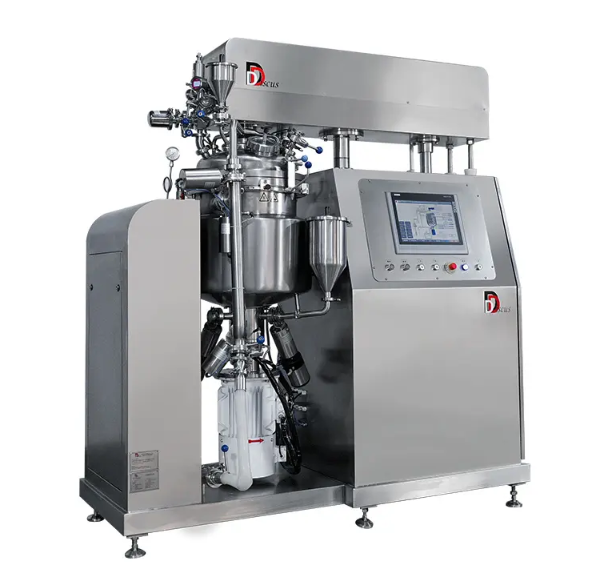
FDA Does Not Certify Vacuum Emulsification Machines — Here's What Actually Matters
Why 'FDA-Certified Equipment' Is a Misnomer: The Agency Regulates Processes, Not Machines
Contrary to what some might think, the Food and Drug Administration doesn't actually certify industrial equipment such as vacuum emulsification machines. What the FDA regulates are manufacturing processes and finished products rather than specific machinery itself. Their rules apply through things like 21 CFR Part 211 for pharmaceuticals and various sections between 700 and 740 covering cosmetics. When manufacturers claim their equipment is "FDA certified," they're basically spreading misinformation about how the agency works. What really counts is whether there's solid evidence of Good Manufacturing Practices being followed. The ball is in the court of either the equipment maker or whoever ends up using it to validate their gear properly. This involves thorough testing, keeping tight control over materials used, and making sure all steps are well documented. Companies facing FDA warnings pay dearly for fixes, with the average cleanup costing around $740,000 according to a study from Ponemon Institute back in 2023. Smart suppliers focus on creating validation records that can withstand scrutiny during audits instead of relying on catchy marketing phrases about certification status.
Key Regulatory Pathways: FDA Registration, GMP Compliance, and 510(k) Clearance (When Applicable)
Three evidence-based mechanisms define regulatory alignment for vacuum emulsification machines:
- Establishment Registration: Facilities using the equipment must register annually with the FDA and list relevant products.
- GMP Adherence: Machines must support core hygiene, traceability, and validation requirements—including surface finish (Ra ≤ 0.8 µm), sanitary welds, and corrosion-resistant materials like 316L stainless steel.
- 510(k) Clearance: Required only if the machine incorporates or modifies a medical device component (e.g., dermatological delivery systems)—not for standard emulsification units used in cosmetics or pharmaceutical manufacturing.
| Pathway | Requirements | Applicability to Machines |
|---|---|---|
| FDA Registration | Facility and product listing | Mandatory for end-users |
| GMP Compliance | IQ/OQ/PQ validation, material controls | Directly governs machine design |
| 510(k) Pre-market Notification | Proof of equivalence to legacy devices | Only for modified medical components |
Focusing on these pathways—not unsubstantiated certifications—ensures sustainable compliance. For instance, a documented CIP validation report and verified Ra ≤ 0.8 µm surface finish directly satisfy GMP audit expectations without reliance on misleading labels.
GMP Compliance Is the Real Benchmark for Vacuum Emulsification Machines
How 21 CFR Part 211 (Pharmaceuticals) and Part 700–740 (Cosmetics) Define Equipment Qualification Requirements
The FDA doesn't actually certify machinery itself, but it sure knows how to enforce those strict GMP standards when it comes to vacuum emulsification equipment design, qualification, and operation. Looking at 21 CFR Part 211, any system used for pharmaceutical applications needs serious contamination control built right into the framework. Think sanitary orbital welds, surfaces that won't react with products, and cleaning procedures that have been properly validated through testing. For cosmetics manufacturers working under Parts 700 to 740, there's another focus area altogether. Cleanability becomes king here, along with surface smoothness measurements around Ra 0.8 microns or better to stop microbes from hiding out and causing product contamination issues. What we're seeing now is a regulatory shift away from just claiming compliance toward proving actual results. Full traceability of materials matters a lot these days, as does using corrosion resistant alloys like 316L stainless steel throughout the system. And don't forget proper documentation of all maintenance activities either. Recent data from FDA inspections back this up too. In 2023 analysis showed that nearly three quarters of all equipment citations came down to poor material qualification practices. So really, getting compliant isn't something that happens after installation starts it needs to begin way earlier in the process planning stages.
IQ/OQ/PQ Validation: The Non-Negotiable Protocol Suite for Vacuum Emulsification Machine Acceptance
The trio of Installation Qualification (IQ), Operational Qualification (OQ), and Performance Qualification (PQ) work together to show whether a facility meets Good Manufacturing Practice standards. IQ basically checks if everything was put together correctly according to specs. Then comes OQ which looks at how accurately parameters are controlled, think about things like maintaining vacuum pressure within +/- 0.1 bar or keeping shear speeds between 0 and 3,000 RPM. Finally there's PQ that tests whether products consistently meet quality standards after at least three production runs. Cutting corners on any part of this process can lead to serious problems down the line. We've seen issues like unwanted biofilm growth, unpredictable droplet sizes, and cross contamination between batches all show up during FDA audits when these steps get skipped. Research from peer reviewed journals indicates that properly validated equipment cuts down on process variations by around two thirds compared to unvalidated systems. For companies preparing for regulatory inspections, thorough documentation covering all three qualification stages isn't just good practice it's absolutely necessary for passing audits without surprises.
What to Audit: Critical Documentation for Vacuum Emulsification Machine Compliance
Material Traceability (e.g., 316L SS Mill Certs), Weld Integrity Logs, and Surface Finish (Ra ≤ 0.8 µm)
According to regulations under 21 CFR Part 211, any equipment used in pharmaceutical manufacturing needs complete traceability all the way from raw materials right through to the final weld work. When sourcing materials, companies should ask for those mill certificates that confirm the actual composition of 316L stainless steel including its chromium, nickel and molybdenum content plus evidence of proper corrosion resistance testing. For weld integrity documentation, these records need to show compliance with ASME BPE standards for orbital welding procedures. They also require inclusion of those post weld inspection reports as part of quality control. Surface roughness measurements are another critical factor here. These surfaces need independent verification using profilometer testing methods. The target Ra value should stay below or equal to 0.8 micrometers because research shows this level helps prevent microbes from sticking to surfaces. Looking at recent industry data from 2023, almost 37 percent of FDA Form 483 citations issued were actually due to problems with surface finish quality on equipment.
Design Qualification (DQ) Records and Clean-in-Place (CIP) Validation Reports
Design Qualification (DQ) documents must demonstrate the machine meets your User Requirements Specification (URS)—including target shear rates, temperature stability, and vacuum integrity. Equally vital are CIP validation reports, which must include:
- Spray ball coverage mapping (≥95% surface contact),
- Residual contaminant testing (≤10 ppm), and
- Bioburden reduction logs confirming ≥4-log reduction.
A 2023 enforcement action revealed missing DQ records delayed product release by 11 weeks—proving that robust upfront design verification prevents downstream disruption.
Real-World Consequence: How a Non-Compliant Vacuum Emulsification Machine Triggered an FDA Warning Letter
An FDA warning from 2023 shows just how expensive it can get when basic compliance is ignored. One manufacturer was using a vacuum emulsification system for making sterile drugs, but they couldn't track where their 316L stainless steel parts came from. They also didn't have proper records showing their surfaces met the required finish standards (Ra ≤ 0.8 µm), which goes against regulations in 21 CFR Part 211. These missing pieces meant their batches weren't reliable anymore. Operations had to stop right away, and fixing everything cost around $740,000 according to Ponemon Institute research from last year. Looking deeper, problems started because they never finished all those qualification documents (IQ/OQ/PQ), forgot to log weld integrity tests, and didn't validate their cleaning processes properly. The real problem wasn't that the machines weren't good enough, but simply that there was no paper trail showing they worked correctly. When companies don't keep Design Qualification records or have proper certification for materials, even brand new equipment turns into a compliance nightmare. This puts patients at risk, damages product quality, and threatens whether a business can keep running smoothly.
Table of Contents
- FDA Does Not Certify Vacuum Emulsification Machines — Here's What Actually Matters
- GMP Compliance Is the Real Benchmark for Vacuum Emulsification Machines
- What to Audit: Critical Documentation for Vacuum Emulsification Machine Compliance
- Real-World Consequence: How a Non-Compliant Vacuum Emulsification Machine Triggered an FDA Warning Letter