 EN
EN

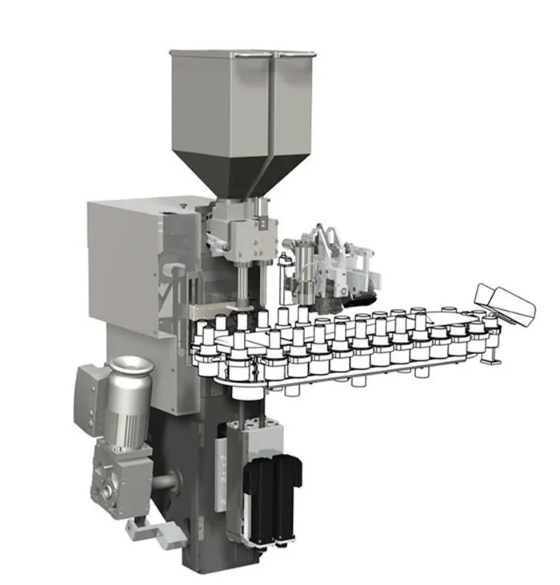
How Homogenizer Mixer Machines Achieve Precision Chemical Mixing
Homogenizer mixer machines deliver unmatched chemical precision through two synergistic fluid-dynamic mechanisms—high-shear and high-pressure processing—engineered to control dispersion at the molecular level.
High-Shear and High-Pressure Mechanisms for Molecular Dispersion
When blades spin faster than 10,000 RPM, they create serious shear forces that tear apart clumps into tiny particles measuring around 2 to 5 microns. At the same time, hydraulic pressure reaching up to 20,000 psi pushes mixed materials through very small openings at the micron level, which actually gets molecules dispersed properly. The combination of these two processes results in about 98% uniform mixing in complex mixtures like silicone emulsions. This matters a lot in making pharmaceutical suspensions because if particles aren't evenly distributed throughout, things settle out over time and dose measurements become unreliable, which nobody wants when manufacturing medications.
Cavitation, Turbulence, and Elongational Flow in Reactive Chemical Systems
Beyond mechanical shear, homogenizers orchestrate three hydrodynamic phenomena critical for reactive chemistry:
- Micro-cavitation: Rapid collapse of vapor bubbles produces localized hot spots (~5,000 K), accelerating polymerization kinetics without thermal degradation;
- Controlled turbulence: Eddy-driven mixing ensures consistent reactant collisions before side-reactions dominate;
- Elongational flow: Viscous stretching of polymer chains suppresses premature cross-linking during synthesis.
Together, these effects enable nanoparticle synthesis with under 10% size variance and cut reaction times by 60% versus axial mixers—while preserving shear-sensitive catalysts through precisely engineered flow geometry.
Key Industrial Applications of Homogenizer Mixer Machines
Stabilizing Emulsions and Suspensions Across Batch and Continuous Chemical Processes
Homogenizer mixers create really consistent mixes at a microscopic level whether working in batches or running continuously. When mixing in batches, these machines stop different components from separating out in things like pesticide blends and industrial coatings by making sure particles get down to under 5 microns. For continuous processes like those seen in oil refineries or food manufacturing lines, they keep everything mixed properly even when the flow goes past 100 liters per minute. The built-in heat control system handles changes in thickness as materials process, which is super important for stuff that gets messed up by temperature fluctuations. Most models can handle thick materials right up to around 50,000 centipoise, giving formulators plenty of options when developing new products.
Enabling Catalyst Dispersion, Nanomaterial Synthesis, and Reactive Blending
These machines play a fundamental role in modern chemical manufacturing processes. When catalysts are evenly dispersed throughout the system, reactions become much more efficient during polymer production. This actually cuts down on wasted raw materials by around twenty percent when compared to traditional mixing methods. Looking at nanomaterial synthesis, the controlled cavitation process creates nanoparticles that stay consistently below 100 nanometers in size. This level of consistency matters a lot for those specialty chemicals where performance is everything. With reactive blending applications, the elongational flow allows different polymers to be processed together even when their viscosities vary dramatically - sometimes as much as ten thousand to one ratio. This makes it possible to produce adhesives and composites without solvents, which means factories can cut volatile organic compound emissions quite substantially.
Homogenizer Mixer Machine vs. Conventional Mixers: Performance and Scalability
Homogenizer mixers are really different from regular agitators or paddle mixers, both in what they do and how intense their action is. Standard mixing equipment works by moving stuff around in big chunks to get things mixed roughly together. But high shear homogenizers actually put specific mechanical force into the mix at pressures over 15 thousand psi and shear rates above a million per second, which breaks down particles down to sub micron sizes. This kind of fine control matters a lot when making nanoemulsions or catalyst slurries because normal mixing just can't stop those tiny particles from clumping back together or settling out. The downside? These machines eat up about 30 to 50 percent more power than standard ones and need constant attention to keep those rotor stator parts working right, which definitely adds to the bottom line when running them continuously at scale. Scaling up these systems brings its own headaches too industrial setups need careful temperature management during reactions that generate heat, plus special materials like Hastelloy C-276 metal alloys to handle harsh chemicals without corroding away. Regular mixers adjust much easier when volumes change since they have simpler moving parts. When dealing with batches smaller than 500 liters where getting consistent results at the micron level matters, homogenizers still stand head and shoulders above everything else. But if the job involves moving huge volumes and doesn't require such tight tolerances, going with planetary mixers or ribbon blenders makes much more sense from a cost standpoint.
Critical Operational Challenges in Industrial Deployment of Homogenizer Mixer Machines
Thermal Control, Corrosion Resistance, and Safety in Exothermic or Aggressive Chemical Environments
Three interdependent challenges define successful industrial deployment:
- Thermal control: Exothermic reactions can rapidly exceed safe operating temperatures, risking product degradation. Precision cooling systems—often integrated directly into the homogenizing chamber—are essential to preserve chemical integrity;
- Corrosion resistance: Exposure to strong acids, alkalis, or organic solvents demands components fabricated from specialized alloys (e.g., Hastelloy®) or ceramic-coated surfaces to avoid premature failure;
- Safety protocols: Volatile or pressurized processes require explosion-proof enclosures, real-time leak detection, and automated pressure relief—non-negotiable safeguards in regulated chemical environments.
Optimal operation hinges on continuous monitoring of shear force profiles and radial temperature gradients. Neglecting any of these factors can reduce effective throughput and yield by up to 30%, according to industry benchmarking data from the Material Processing Review (2023).