 EN
EN

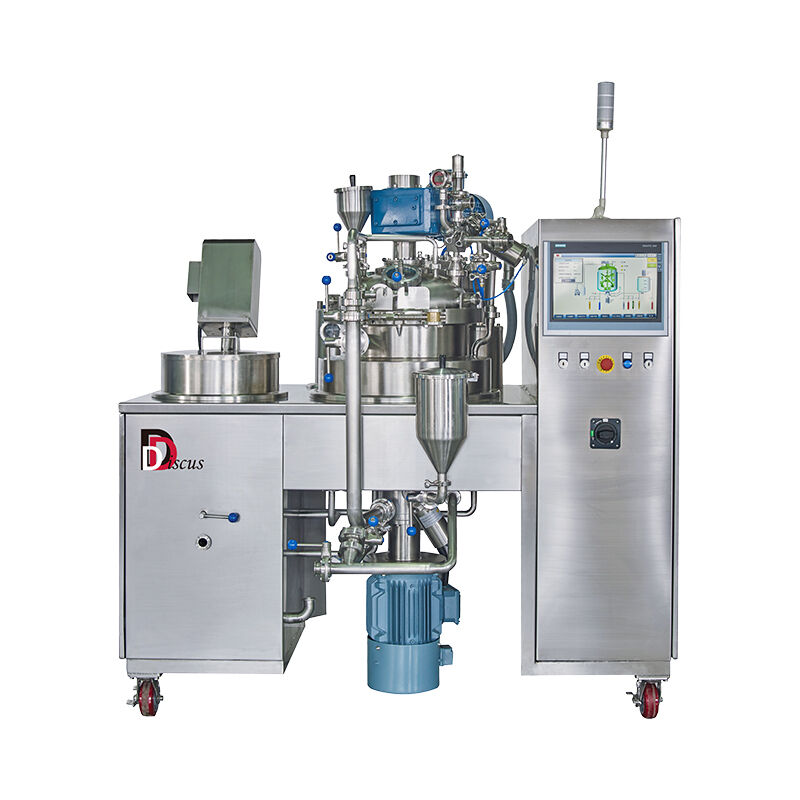
Core Customization Capabilities of Vacuum Homogenizer Mixer Factories
Vacuum homogenizer mixer factories excel in adapting to client-specific needs through robust OEM (Original Equipment Manufacturer) and ODM (Original Design Manufacturer) frameworks. These models enable collaborative engineering—converting requirements like batch size, viscosity thresholds, or shear sensitivity into fully functional, validated units. Key design phases include material compatibility analysis (e.g., 316L stainless steel for chemical resistance), vacuum optimization (targeting ≤0.08 MPa to eliminate air entrapment), and motor power tuning to deliver precise, controllable shear rates. Rigorous prototyping ensures compliance with operational demands—from rapid clean-in-place (CIP) cycles to modular scalability—minimizing development risk and accelerating time-to-market for bespoke mixing solutions.
OEM/ODM Frameworks: How Factories Translate Client Specifications into Functional Units
Factories leverage OEM/ODM partnerships to transform client inputs—such as throughput targets, temperature control ranges, or viscosity profiles—into custom-engineered systems via structured workflows. Initial consultations define core parameters (e.g., vessel volumes from 100L–500L), often supported by CAD-based fluid dynamics simulations. Engineers then integrate purpose-built components: variable-speed agitators, corrosion-resistant alloys, or upgraded rotor-stator assemblies capable of achieving sub-5-micron particle dispersion for demanding emulsions. This approach reduces scaling errors by 30% while ensuring seamless integration into existing production lines. Active client collaboration at each stage—design review, prototype testing, and validation—ensures functional fidelity, regulatory readiness, and long-term cost efficiency.
Case Study: Custom 50L–300L Vacuum Homogenizer Mixers for High-Viscosity Cosmetic Emulsions
A leading cosmetics manufacturer required vacuum homogenizer mixers tailored to process high-viscosity emulsions (>50,000 cP) across 50L–300L batch sizes. To prevent ingredient degradation and ensure consistent homogenization, the solution featured triple-jacketed vessels for uniform thermal control, high-shear blades engineered for <2-micron particle dispersion, and vacuum stabilization below 0.08 MPa—reducing aeration and extending shelf life by 20%. Integrated automated viscosity sensors enabled real-time speed adjustment, cutting processing time by 15% while maintaining full GMP compliance. This case underscores how targeted, application-driven customization resolves industry-specific challenges without compromising scalability or regulatory alignment.
Key Technical Parameters Driving Custom Vacuum Homogenizer Mixer Design
Batch vs. In-Line Configurations: Optimizing for Viscosity, Throughput, and Clean-in-Place Requirements
Factory selection between batch and in-line configurations hinges on three interdependent technical criteria:
- Viscosity compatibility: Batch systems dominate for high-viscosity applications (≥50,000 cP)—such as silicone pastes or cosmetic bases—leveraging extended dwell time and adjustable shear profiles.
- Throughput demands: In-line units excel where continuous flow is critical (e.g., low-viscosity serums or pharmaceutical intermediates), routinely sustaining >500 L/hour with minimal operator intervention.
- Clean-in-Place (CIP) efficiency: In-line configurations reduce cleaning cycle duration and water consumption by up to 40% compared to batch systems, per hygienic processing benchmarks (2023).
Industry adoption reflects these trade-offs: over 80% of cosmetics manufacturers use batch systems for complex emulsion development, while sterile pharmaceutical production increasingly favors in-line designs for validated, continuous manufacturing.
Smart Integration: PLC Automation, IoT Connectivity, and Factory Line Compatibility
Modern vacuum homogenizer mixers embed industrial-grade PLCs that replicate viscosity and shear profiles with ±2% deviation tolerance—essential for batch consistency. IoT-enabled sensors continuously monitor vacuum stability (maintained within 0.08–0.095 MPa), thermal transitions during phase inversion, and real-time load fluctuations on the homogenizer shaft. Seamless integration into legacy and modern production environments requires native support for SCADA systems and OPC-UA protocols. Data aggregated from 47 production facilities shows IoT-connected units reduce formulation-related human error by 27%, primarily through automated parameter logging, alarm-triggered interventions, and remote diagnostics.
Industry-Specific Compliance and Adaptation by Vacuum Homogenizer Mixer Factories
Cosmetics, Pharma, and Food: GMP, EHEDG, and 3-A Sanitary Standards in Custom Build Specifications
Vacuum homogenizer mixer factories tailor every custom build to sector-specific regulatory mandates—not as add-ons, but as foundational design criteria. Pharmaceutical units adhere strictly to GMP, incorporating traceable material logs, IQ/OQ/PQ validation support, and contamination-control features like double-sealed bearings and HEPA-filtered venting. Food-grade systems meet EHEDG guidelines and 3-A Sanitary Standards—requiring electropolished surfaces (Ra ≤0.8 µm), crevice-free welds, and drainable geometry to eliminate microbial harborage. Cosmetic applications prioritize GMP-aligned electrolytic polishing and CIP-ready architecture to preserve emulsion integrity across batches. Across all sectors, factories standardize 316L stainless steel construction, automated CIP integration, and comprehensive documentation packages—ensuring audit readiness against 2024 global safety and hygiene benchmarks.
Beyond Manufacturing: Evaluating Vacuum Homogenizer Mixer Factory Support Ecosystems
Local Presence, Commissioning Support, and Lifecycle Service as Differentiators Among Factories
Post-manufacturing support is the decisive factor in long-term equipment performance—and a key differentiator among vacuum homogenizer mixer factories. Facilities with regional technical hubs cut average commissioning delays by 35% versus remote-only providers, enabling on-site verification of CIP module synchronization, PLC network handshaking, and shear calibration before first-run validation. Commissioning specialists also deliver role-specific operator training, reducing startup errors and accelerating qualification timelines. Most critically, lifecycle service agreements—covering predictive maintenance scheduling, guaranteed spare-part lead times (<72 hours for critical wear items), and biannual efficiency audits—directly extend mean time between failures (MTBF) by up to 40%. For industries reliant on uninterrupted batch continuity—pharmaceuticals, cosmetics, and nutraceuticals—this operational resilience transforms equipment procurement from a capital transaction into a strategic, performance-guaranteed partnership.
FAQ Section
What is the role of OEM and ODM in vacuum homogenizer mixer customization?
OEM (Original Equipment Manufacturer) and ODM (Original Design Manufacturer) allow vacuum homogenizer mixer factories to translate client inputs like viscosity, batch size, and production parameters into custom-engineered systems.
How does batch vs. in-line configuration impact mixer design?
Batch systems are ideal for high-viscosity applications needing extended shear profiles, while in-line systems cater to continuous low-viscosity flows, reducing cleaning cycles and water consumption.
What regulatory standards do vacuum homogenizer mixer factories comply with?
Factories adhere to GMP, EHEDG, and 3-A Sanitary Standards, ensuring designs feature traceable materials, electropolished surfaces, and automated CIP systems.
What post-manufacturing support is offered by these factories?
Support includes regional hubs for commissioning, predictive maintenance scheduling, and lifecycle service agreements that optimize equipment performance and uptime.
Table of Contents
- Core Customization Capabilities of Vacuum Homogenizer Mixer Factories
- Key Technical Parameters Driving Custom Vacuum Homogenizer Mixer Design
- Industry-Specific Compliance and Adaptation by Vacuum Homogenizer Mixer Factories
- Beyond Manufacturing: Evaluating Vacuum Homogenizer Mixer Factory Support Ecosystems
- FAQ Section