 EN
EN

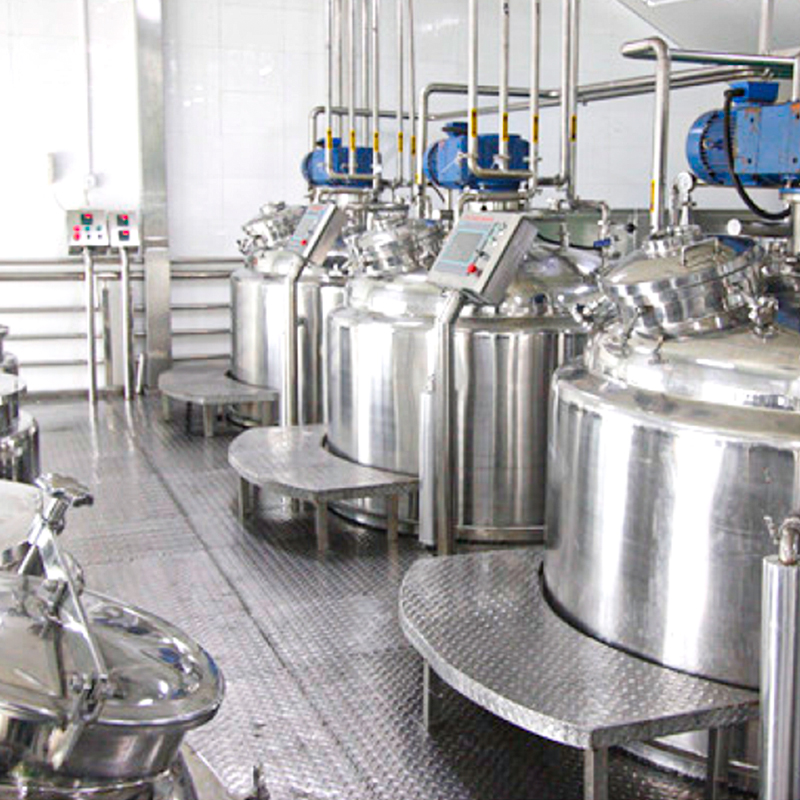
Understanding Vacuum Homogenizer Mixer Machine Functionality
How Vacuum Emulsifying Cosmetic Mixer Functionality Enhances Product Consistency
Vacuum homogenizer mixers really excel at getting products mixed thoroughly thanks to their high shear action. These machines spin their mixing heads incredibly fast, sometimes over 10 thousand revolutions per minute, which helps break apart those stubborn oil-water boundaries. What we end up with are stable emulsions where particles get down to around 2 to 5 microns in size. This matters because it means our creams and lotions will have the same thickness from one batch to the next without any surprises. When working with ingredients that might be damaged by heat, these machines come equipped with cooling systems that keep things chill at just the right temperature, usually within plus or minus 1 degree Celsius. According to what various industry reports indicate, this kind of mixing tech cuts down on texture problems by roughly 90% when compared against older mixing techniques.
Core Operating Principles of Vacuum Homogenizer Mixer Machines
These systems integrate three critical components:
- Vacuum chamber: Maintains negative pressure (-0.08 to -0.098 MPa) to eliminate air pockets
- Homogenizing assembly: Dual-shear blades operate at 25–40 m/sec tip speed for ultrafine dispersion
- Programmable logic controller (PLC): Automates batch parameters such as agitation duration (typically 15–90 minutes) and vacuum ramp rates
The process begins with vacuum creation, followed by simultaneous heating or cooling and mechanical emulsification. During the emulsification phase, materials undergo 6–12 complete mixing cycles to ensure molecular-level integration.
Role of Vacuum Environment in Preventing Air Entrapment and Oxidation
When running at around 92 to 99 percent vacuum levels, most of the dissolved oxygen gets removed from formulations, roughly about 98.7 percent actually. This creates an environment without oxygen that really helps keep those antioxidant-rich cosmetics stable for longer periods. The lack of oxygen makes a big difference in how fast sensitive components break down. Take vitamin C, for instance, its oxidation rate drops by nearly three-quarters when processed this way. Microbial growth also gets inhibited quite effectively, cutting down on contamination risks by about sixty percent. Plus, it stops bubbles from forming in silicone-based products which can be a real problem otherwise. Industry reports on emulsification tech show that skincare items made using vacuum processing tend to last about eighteen percent longer on store shelves compared to regular atmospheric mixing methods. And they maintain their pH balance pretty well too, staying within plus or minus point three units for almost two whole years.
Preparing the Vacuum Homogenizer Mixer Machine for Daily Operation
Daily checks including lubrication, fluid levels, and operational readiness
Starting the day right means checking those hydraulic fluids and lubricants against what the manufacturer recommends. We've seen time and again how low on lubrication can be a real problem for bearings in industrial mixers too, actually accounting for around 34% of early failures according to Pump Industry Analysis from last year. Don't forget to look at that vacuum pump oil; it should be clear, not cloudy, and make sure coolant tanks are full enough so machines don't run hot when they're working long hours straight through. Before turning anything on for mixing cycles, always give valves a quick test to see if they respond properly and scan all those control panels for red lights or warnings. A few minutes spent doing these checks can save hours of downtime later on.
Visual inspection of mixer components to detect early wear or misalignment
When checking blades, angle the light source so any nicks or deformations become visible. These flaws really affect how well the cutting works. For seals, wipe down those gasket areas until they're completely dry. If there's still stuff left behind after cleaning, that means there are leaks happening right there and they need fixing fast. Getting shaft alignment right matters a lot too. Most shops use laser tools now because even something as small as 0.1 mm off-center can make vibrations jump up by around three times what they should be according to research published in Precision Engineering Journal back in 2022.
Performance testing (speed, temperature, flow rate) before startup
Conduct a 5-minute dry run to validate:
- Rotor speed stability (within ±2% variance)
- Heating jacket ramp-up rate (°C/min)
- Vacuum pressure recovery time (<30 seconds)
Compare results against baseline commissioning data to identify performance drift early.
Safety features testing and emergency stop verification
Activate emergency stops from all control stations and monitor brake engagement times. Per EN 13898:2023 standards, modern vacuum homogenizers must halt rotation within 0.8 seconds and release vacuum within 3 seconds. Test pressure relief valves by safely exceeding operating limits to confirm automatic shutdown activates at 110% of maximum rated capacity.
Effective Cleaning Procedures to Prevent Contamination
Cleaning Procedures for Industrial Mixers to Ensure Batch Purity
Thorough post-production cleaning prevents cross-batch contamination in vacuum homogenizer mixer machines. Clean-In-Place (CIP) systems enable sanitization of vessels, blades, and pipelines without disassembly, reducing downtime by 20–30% compared to manual cleaning. A three-stage process—pre-rinse, detergent wash, and final rinse—effectively removes residues while remaining compatible with cosmetics and pharmaceuticals.
Machine Disassembly and Component Cleaning Protocols
For deep cleaning, disassemble agitators, seals, and valves weekly using manufacturer-approved tools. Immerse components in pH-balanced solutions (5.5–7.0) to dissolve hardened emulsifiers from blade surfaces. After cleaning, use compressed air to thoroughly dry parts and eliminate moisture-related microbial risks.
Cleaning and Lubrication of Mixing Equipment After Each Use
After sanitization, apply NSF H1-registered grease to bearings and gearboxes to prevent corrosion in high-humidity environments. Proper lubrication intervals and compatible grease types are critical—improper practices account for 78% of premature bearing failures (2023 industry survey).
Preventing Microbial Growth and Cross-Contamination in Cosmetic Applications
It makes sense to assign certain mixers specifically for products that contain allergens like nut oils, which helps prevent any accidental mixing between batches. After cleaning equipment, running some ATP swab tests gives a good indication of whether everything got properly sanitized or not. Spraying down those hard-to-reach spots around silicone gaskets with 70% isopropyl alcohol every day cuts down on microbes pretty effectively most of the time. For really tough grime buildup, rinsing with water around 45 degrees Celsius (about 113 Fahrenheit) works best to break down stubborn fats while still letting the sanitizers do their job properly. Just need to make sure temperatures stay consistent during this process though.
Inspecting and Maintaining Critical Components for Optimal Performance
Blades and impellers inspection for erosion or deformation
Inspect homogenizer blades and impellers monthly for pitting, edge rounding, or material loss exceeding 0.5mm. Erosion often signals improper viscosity handling or abrasive contaminants. Replace components showing more than 10% thickness reduction to preserve shear efficiency crucial for emulsion stability.
Seal inspection and replacement to prevent leaks under vacuum
Test vacuum-rated seals quarterly at 95% of operational vacuum levels. Use feeler gauges to check for compression set—gaps over 0.25mm require replacement. As noted in industrial maintenance best practices, 72% of vacuum system failures stem from degraded shaft seals.
Inspection and testing of bearings and motors
Lubricate motor bearings every 400 operational hours using NSF H1-registered grease. Monitor winding temperatures during peak loads; sustained readings above 85°C (185°F) may indicate impending bearing failure. Annual dynamic balance testing reduces vibration-induced wear by 34% (2023 Rotating Equipment Maintenance Report).
Shaft alignment and vibration monitoring to extend service life
Maintain shaft concentricity within 0.05mm tolerance using laser alignment tools. Install real-time vibration sensors to detect frequencies above 6.3 mm/s RMS—the early warning threshold for most vacuum homogenizers. Facilities applying predictive alignment corrections report 29% longer equipment lifespans compared to reactive maintenance models.
Implementing Scheduled Maintenance for Long Term Reliability
Developing Maintenance Schedules (Monthly, Quarterly, Annually)
Structured maintenance preserves performance and reduces unplanned downtime by 52% (Ponemon 2023). Tiered schedules include:
- Monthly: Inspect seals and bearings, verify vacuum pump function
- Quarterly: Test motor load capacity, recalibrate temperature sensors
- Annual: Replace high-wear parts (e.g., homogenizer valves), overhaul hydraulic systems
Following OEM-recommended intervals prevents cascading failures—facilities with structured programs report 73% fewer seal-related leaks during production.
Preventive Maintenance Strategies to Minimize Downtime
Coordinate maintenance tasks with planned production gaps to minimize disruptions. Pre-staging spare rotor-stator assemblies during shutdowns cuts replacement time by 40%. Vibration analysis identifies early impeller imbalances, enabling corrective action before irreversible bearing damage occurs.
Documenting Maintenance Logs and Tracking Component Lifespan
Digital maintenance records provide auditable trails for seal replacements, lubrication events, and alignment adjustments. Cloud-based tracking systems alert teams when components approach 80% of their projected 10,000-hour lifespan. Facilities using automated logs reduce repeat maintenance errors by 62% compared to manual tracking.