 EN
EN

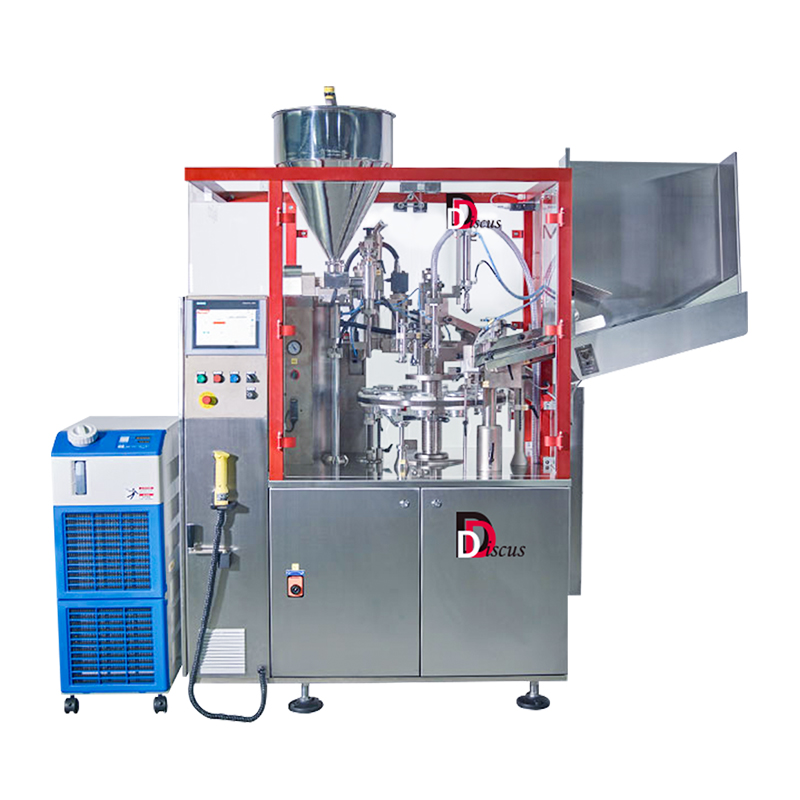
How Fully Automatic Tube Filling Machines Work and Their Core Advantages
Definition and Core Functions of a Fully Automatic Tube Filling and Sealing Machine
A fully automatic tube filling machine integrates tube feeding, precise volumetric filling, and hermetic sealing into a single PLC-controlled system. These machines handle viscosities ranging from thin serums to thick creams (0.5—500,000 cP) while maintaining ±0.5% dosing accuracy—essential for pharmaceuticals and premium cosmetics.
Key Automation Features: PLC Control, Touchscreen Interface, and Recipe Management
Modern systems rely on three core automation technologies:
- PLC-driven motion control ensures consistent fill volumes across 10,000+ cycles with minimal drift
- 15-inch touchscreen HMIs allow one-touch adjustments for tube diameters (10—50 mm) and fill volumes (5—500 ml)
- 500+ recipe storage capacity reduces product changeover time by 83% compared to manual setups
Semi-Automatic vs Fully Automatic Tube Fillers: Automation Level and Efficiency Comparison
With semi automatic machines, workers still need to handle loading tubes and tweak various settings themselves, which cuts down on how much time the equipment can actually run and affects product consistency across batches. Fully automatic versions tell a different story though they hit around 97 percent uptime thanks to those fancy closed loop sensors plus built in diagnostics that catch issues before they become problems. A recent report from PMMI in 2023 showed something pretty impressive about going fully automated. Labor expenses dropped nearly three quarters compared to older semi auto setups while products coming off the line stayed consistent about half again better than before. And when running non stop for weeks at a time, these automated systems barely generate any waste at all, sometimes less than one percent over an entire month of production without missing a beat.
Challenges of Using Fully Automatic Systems in Short-Run Production Environments
High Initial Investment vs. Utilization Rate in Low-Volume Production
Industrial automation systems usually come with a price tag around $740,000 according to Ponemon's 2023 report, so return on investment really hinges on how much they get used. For fully automatic tube fillers specifically, most need at least 65 to maybe 80 percent capacity utilization before the investment starts paying off. That becomes quite a hurdle for companies producing less than 50 thousand units each month. Looking at industry figures, roughly 58 percent of manufacturers end up running their automated packaging lines at less than 40 percent capacity whenever dealing with small batch sizes below 10 thousand units. This obviously creates problems for financial performance since these machines aren't being utilized efficiently enough to cover their costs.
Changeover Time and Flexibility Limitations for Frequent Product Switches
Automated systems often require 45—90 minutes for product changeovers due to recalibration of servo-driven nozzles and capping heads, compared to 15—20 minutes on manual machines. This becomes a bottleneck for cosmetic contract packagers managing 10+ SKUs daily—a scenario affecting 73% of such facilities, as reported in the 2023 Automation Integration Report.
Operational Downtime Risks Due to Setup Complexity in Small Batches
Precision alignment between tube positioning and filling mechanisms increases vulnerability to errors during frequent changeovers. Facilities producing batches under 5,000 units face 23% more unplanned downtime than high-volume operations (PMMI 2023), primarily due to sensor misalignment and calibration issues when switching materials.
Strategies to Optimize Fully Automatic Machines for Small or Variable Batch Runs
Reducing Changeover Time With Quick-Adjust Mechanisms and Standardized Tooling
Newer fully automatic machines cut changeover times by 30—50% using tool-free adjustment systems. Self-centering tube chucks and quick-release clamps enable diameter changes in under 10 minutes, while standardized capping heads work across multiple container types. These features reduce mechanical reconfiguration labor by 65% compared to legacy models (Packaging Digest 2023).
Leveraging Recipe Memory and Programmable Settings for Fast Product Transitions
Integrated PLC systems store over 200 parameter sets—including viscosity compensation and torque limits—allowing one-touch recall for different products. In a six-month pilot with a European contract manufacturer, this eliminated manual recalibration for 89% of common material transitions in cosmetics and pharma applications.
Maintenance and Operator Training for Reliable Performance in High-Mix Environments
Comprehensive training programs combining simulation tools and hands-on practice reduce error rates by 42% in low-volume, high-mix environments. When paired with predictive maintenance aligned with automation ROI optimization principles, these practices help maintain over 95% equipment availability—even when switching between 15+ product formats weekly.
Scalability and Long-Term Flexibility of Fully Automatic Tube Filling Equipment
Modular Design and Future Expansion Potential for Growing Production Needs
Modular fully automatic tube fillers allow incremental scaling without full system replacement. Interchangeable filling heads, capping stations, and labeling modules enable capacity increases of 30—50% through plug-in upgrades. This approach reduces future capital spending by 22—35% compared to fixed-configuration systems, as demonstrated by modular liquid filling solutions in evolving production environments.
Balancing Speed and Adaptability: Can Full Automation Support Agile Manufacturing?
Old school automated systems were built for maximum speed, typically handling around 1,200 to 2,000 tubes per hour. But newer equipment comes with smart adaptive controls that work better for those small batch runs. These machines now have real time viscosity sensors along with pumps that automatically recalibrate themselves. The result? Fill accuracy stays within plus or minus half a percent even when switching from something like 10ml serums all the way up to 100ml adhesives. And this kind of flexibility makes a big difference. Facilities running lots of different products see about an 18% reduction in wasted materials compared to what happens with the old style rigid automation setups that couldn't adapt as well.
Industry Insight: 68% of Mid-Sized Pharma Packagers Prioritize Scalability Over Speed (PMMI 2023)
According to a recent PMMI study from 2023, around 70 percent of mid sized pharmaceutical packaging companies actually care more about being able to upgrade their equipment than they do about maximum production speed. Makes sense when we look at what's happening in the market these days. About 84% of contract packagers are dealing with monthly order volumes below 5,000 units right now. That's where modular tube filling systems come into play. These machines let facilities begin operations with just four lanes and then scale up to twelve as business needs grow over time. The ability to adapt without having to completely replace equipment helps maintain good return on investment in the long run for most manufacturers.
Real-World Suitability: Case Study of a Cosmetics Manufacturer Using Automation for Batches Under 5,000 Units
Performance Across Viscosities, Tube Sizes, and Materials Without Major Retooling
One mid size cosmetics manufacturer managed to produce 187 different batches each year across 23 unique formulas all on just one fully automated tube filling machine. This equipment consistently delivered fill accuracy within plus or minus 0.5%, working equally well with aluminum, laminated, and plastic tubes ranging from 15 to 100 milliliters. What makes this really impressive is how it handles products with vastly different consistencies - from thin 0.8 centipoise serums right up to thick 450,000 centipoise balms. The secret lies in those advanced nozzle designs combined with pressure controlled filling heads that make switching between products practically effortless. Operators can tweak settings through the touchscreen interface in less than three minutes per change, which means no more time consuming physical retooling between batches.
Evaluating ROI and Operational Agility in a High-Mix, Low-Volume Setting
When they installed those programmable CIP systems along with those modular sealing heads, the factory saw some serious improvements. Changeovers went down dramatically from 45 minutes all the way to just 12 minutes flat. Even though they were running batches of around 4,200 units each time, their machines stayed busy about 92% of the time. The bottom line? About $18,700 saved every month on labor costs alone, and they got their investment back in just over a year because small batches moved through 35% quicker than before. Now most emergency orders get shipped out within three days without messing up regular production schedules at all. This shows real world results of what happens when companies invest in smart automation solutions for today's fast changing market demands.
Table of Contents
- How Fully Automatic Tube Filling Machines Work and Their Core Advantages
- Challenges of Using Fully Automatic Systems in Short-Run Production Environments
- Strategies to Optimize Fully Automatic Machines for Small or Variable Batch Runs
- Scalability and Long-Term Flexibility of Fully Automatic Tube Filling Equipment
- Real-World Suitability: Case Study of a Cosmetics Manufacturer Using Automation for Batches Under 5,000 Units