 EN
EN

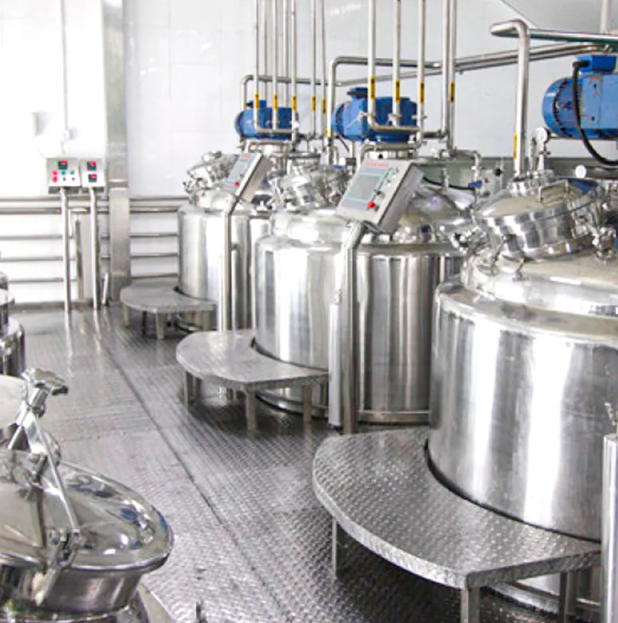
Core Working Principle of Vacuum Homogenizer Mixer Machines
High Shear Rotor Stator Interaction Under Vacuum
At the heart of the system is what we call a rotor-stator setup, carefully engineered for maximum effectiveness. When the fast spinning rotor moves inside the fixed stator, it creates really strong shear forces right in that tiny space between them about 0.2 to 0.5 millimeters wide. As materials go through this area, the force breaks apart droplets and particles, making sure everything gets reduced down to sizes between 200 nanometers and 2 micrometers consistently. Running the whole process under vacuum conditions helps keep things stable because there's no air getting in the way at this important stage. This not only protects the quality of the final product but also makes the mixing process work better overall.
How Vacuum Prevents Oxidation and Eliminates Air Entrapment
Using vacuum during emulsification isn't just about getting rid of air bubbles beforehand but actually throughout the whole process, which makes it absolutely essential for products that are sensitive to oxidation like those fancy pharmaceutical creams and potent cosmetic serums we see these days. When manufacturers create an environment low on oxygen, they're basically stopping those fragile ingredients like retinoids, peptides, and unsaturated fats from breaking down through oxidation. And let's not forget about those tiny air pockets that can ruin everything. Real time degassing helps prevent all sorts of problems including weird textures, layers separating out, and stuff that just doesn't stay stable over time. Temperature control is another big deal here too. Most labs keep things pretty tight around ±2°C when working between 40 and 70 degrees Celsius. This careful management protects those delicate components from getting messed up by heat, whether it's losing their effectiveness or becoming too runny.
Critical Process Parameters for Optimizing Emulsification Efficiency
Vacuum Level: Finding the Sweet Spot Between Degassing and Stability
Getting the vacuum settings right is really important. If it's set too low, there will still be tiny bubbles left behind that speed up oxidation and cause things to go bad faster. But crank it up too much and we risk losing those volatile components or messing up sensitive emulsions like silicones or anything with low viscosity. Most folks in the business stick to around 0.5 to 0.9 bar when working with water-based or oil-in-water mixtures according to what Process Standards Institute published last year. At these levels, they usually get rid of over 95% of the air while keeping everything stable and flowing properly. And let's face it, this matters because products just last longer on shelves when oxidation isn't happening so fast.
Shear Rate, Mixing Time, and Temperature — Balancing Droplet Size and Product Integrity
These three parameters are interdependent levers for controlling emulsion structure and functionality:
- Shear rate (5–25 m/s at the rotor tip) governs droplet breakup kinetics—higher shear yields finer dispersions (e.g., nanoemulsions of 0.1–1 µm), but excessive shear may denature proteins or fragment polymers in biopharmaceutical applications.
- Mixing time must be formulation-specific: under-processing invites coalescence; over-processing generates excess heat and mechanical stress, risking ingredient degradation.
- Temperature control, maintained within ±2°C of the ideal setpoint, prevents thermal damage—especially critical for enzymes, vitamins, or thermolabile actives.
Synchronizing these variables ensures uniform particle distribution while retaining functional properties such as spreadability, clarity, or bioavailability.
Equipment Design and Maintenance Best Practices for Sustained Performance
Rotor-Stator Geometry, Fill Volume, and Recirculation Flow Optimization
The rotor-stator setup isn't one size fits all. It needs to work with the specific properties of what's being processed and the desired particle size outcome. Getting those clearance gaps right between 0.2 to 0.5 mm makes a big difference. These tight spaces create strong shearing forces but also help prevent areas where materials just sit around and break down. When filling the vessel, aim for about 60 to 80% capacity. Fill too little and vacuum performance drops plus stuff starts swirling around unnecessarily. Fill too much and air doesn't escape properly while the shear forces become inconsistent throughout the batch. For recirculation flow, finding that sweet spot matters because it lets materials stay long enough in the intense shear area without overheating. Some research indicates getting this right can actually reduce droplet sticking together by nearly 40% when running processes for longer periods.
Key maintenance protocols include:
- Quarterly verification of rotor-stator alignment
- Seal integrity inspections every 200 operating hours
- Viscosity-adjusted flow rate recalibration per formulation change
Following this maintenance schedule can cut down on unexpected equipment shutdowns by about half, according to Process Standards Institute research from last year. Plus, machines tend to last anywhere from three to five extra years when properly maintained. Maintenance records need to track how different parts wear over time so technicians know which components are likely to fail first. Things like stator teeth and mechanical seals often show signs of stress long before they actually break down. Getting ahead of these issues through regular monitoring helps avoid costly repairs and keeps production running smoothly.
Smart Automation Features That Enhance Vacuum Homogenizer Mixer Machine Consistency
When smart automation gets added to vacuum homogenizers, these machines stop being just manual tools and start acting like real process systems that can adapt on their own. Inline sensors built right into the equipment keep an eye on all sorts of parameters as they happen in real time. We're talking about things like how thick the mixture is getting, what temperature it's at, how much force the motor is exerting, and whether the vacuum stays stable throughout. All this information gets sent straight to control systems that work in a loop. What happens next? Well, these control systems make changes while things are running. They tweak rotor speeds, adjust vacuum levels, and even modify how long mixing goes on for. This helps deal with problems when raw materials aren't exactly the same each time, batches vary between themselves, or conditions around the machine change unexpectedly. At the end of the day, this means manufacturers get products with droplet sizes that stay pretty much the same from one production run to another. And that consistency matters a lot, especially when companies need to meet strict regulations in the pharmaceutical world or want to maintain specific feel and appearance standards in cosmetic products.
Smart systems that track changes in torque patterns and how seals lose pressure over time can actually predict when maintenance will be needed, which means fewer emergency fixes down the road. The automatic recording of data with timestamps produces secure batch records that meet those strict FDA regulations (Part 11 of 21 CFR). All told, these technologies reduce hands-on work by around 40 percent, make batches more consistent from run to run, and keep production lines running smoother than before. Machines that adjust themselves based on real-time material analysis instead of sticking to preset parameters really make a difference here, cutting down on unexpected stoppages during manufacturing processes.