 EN
EN

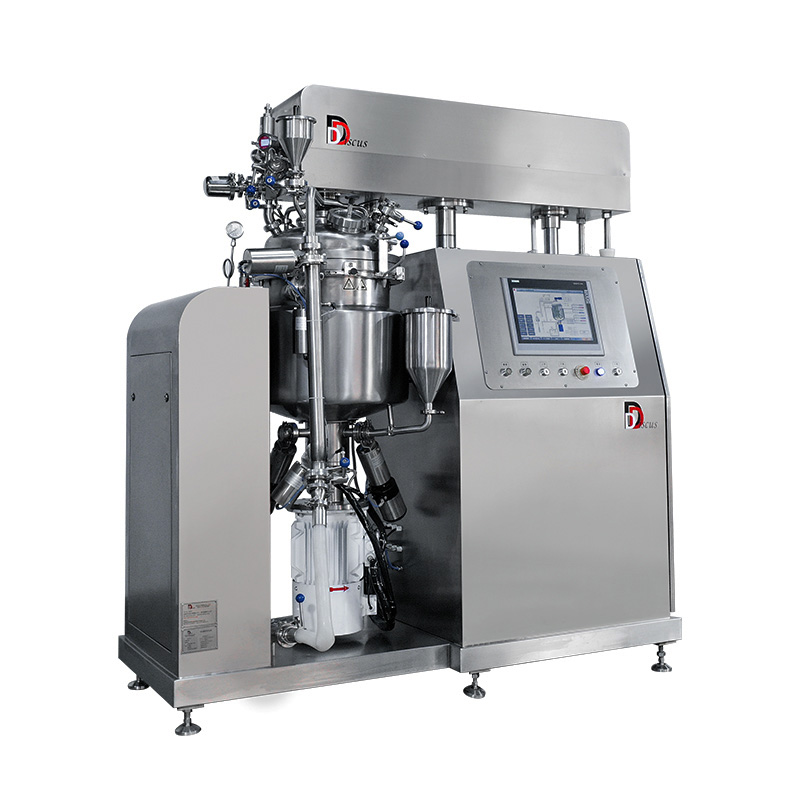
Tackling the Complexity of High-Viscosity Formulation
In the advanced sectors of cosmetic and pharmaceutical manufacturing, the ability to produce stable, uniform emulsions—especially with high-viscosity materials—is a critical performance metric. Thick, cream-like products such as face moisturizers, styling gels, and therapeutic ointments present significant processing challenges. If the mixing mechanism is inadequate, manufacturers face uneven texture, air entrapment, and inconsistent product quality, all of which compromise consumer trust. Modern vacuum emulsification machines have completely transformed this narrative. These systems are specifically designed to manage high-viscosity inputs by integrating powerful, high-shear homogenization with controlled vacuum environments. By effectively removing trapped air while maintaining rigorous shear force, these machines ensure that even the thickest materials are transformed into smooth, stable emulsions that meet the most demanding industrial standards.
Engineering Precision Through High-Shear Technology
The technical superiority of vacuum emulsifiers lies in their sophisticated design, which centers on a multi-stage homogenization process. When dealing with high-viscosity substances, friction and mechanical resistance can lead to overheating and structural degradation. However, state-of-the-art systems utilize advanced stator-rotor assemblies that provide high-speed shearing action, breaking down large molecular aggregates into fine droplets. This mechanical process is further enhanced by the integrated vacuum system, which pulls air out of the material to prevent oxidation and ensure a denser, more uniform end product. For plant engineers, the result is a process that is not only faster but significantly more reliable. By controlling every variable—from mixing speed to pressure—these machines enable the production of complex formulations that would be impossible to achieve with standard mixing equipment.
Driving Production Efficiency with Full Automation
The shift toward fully automated emulsification lines is a pivotal moment for industrial productivity. Automation removes the variance introduced by manual oversight, ensuring that every batch follows an identical processing sequence. In the cosmetics industry, for instance, the adoption of automated production lines has led to drastic improvements in yield consistency. Manual mixing cycles are time-consuming and prone to human error, whereas an automated emulsification system runs continuously with precision, reducing labor costs while maximizing output. These machines serve as the heart of the modern factory floor, allowing operators to monitor production parameters in real-time. This efficiency is no longer just a luxury; it is a necessity for businesses aiming to compete in a fast-paced market where product quality and production speed are the primary determinants of success.
The Future of Intelligent Manufacturing
As manufacturing continues to lean into industry 4.0, vacuum emulsification technology is evolving to become more intelligent and data-driven. The future lies in machines that can self-regulate based on real-time feedback loops—adjusting temperature, vacuum levels, and rotation speeds automatically as the viscosity of the material changes during the batch cycle. This forward-looking approach ensures that the production process is self-optimizing, minimizing the need for manual adjustments and further reducing the risk of batch failure. Manufacturers adopting these intelligent solutions are not just upgrading their equipment; they are future-proofing their facilities. The ability to integrate these machines into broader factory management systems allows for a transparent and traceable production process, providing essential data for long-term scalability and continuous improvement.
Discus as the Backbone of Industrial Excellence
Achieving consistent, high-quality results in demanding production environments requires more than just machinery; it requires a partner dedicated to technical precision and reliable supply chain support. Discus has established itself as an industry leader by providing robust, high-performance emulsification solutions that are built to handle the most complex material challenges. By prioritizing durability in mechanical design, innovation in homogenization technology, and ease of use in software integration, Discus ensures that manufacturers can tackle high-viscosity applications with absolute confidence. The commitment to engineering excellence allows production lines to run at peak capacity with minimal maintenance. With the comprehensive technical support and manufacturing capabilities provided by Discus, businesses are empowered to push the boundaries of their production capabilities, ensuring that every product manufactured meets the highest standards of clarity, consistency, and professional quality.