 EN

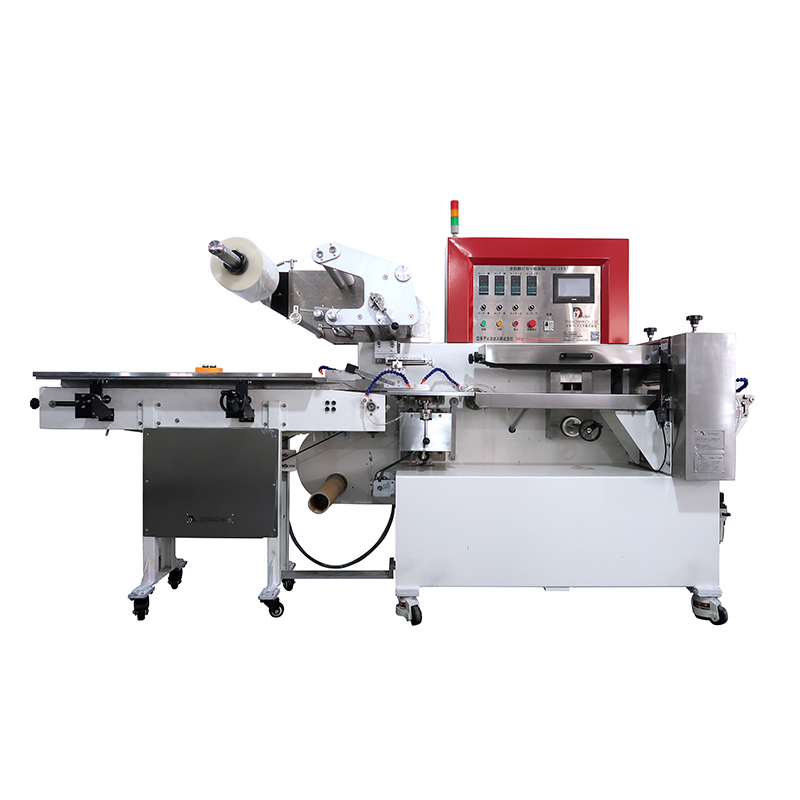
The Industrial Evolution: Bridging Upstream Manufacturing and End-of-Line Packaging
For a long time, factory optimization tended to stop abruptly right at the final assembly workstation, leaving packaging as a standalone, manual afterthought. Stepping onto typical manufacturing floors across various industrial sectors, it is common to see state-of-the-art production lines choked by sluggish, disjointed packaging stations that create frustrating inventory backlogs. Integrating a fully automatic packaging machine directly into the core production line is no longer just an optional luxury; it serves as a fundamental prerequisite for modern industrial efficiency. When automated packaging systems interface directly with upstream stamping, machining, or assembly modules, traditional bottlenecks disappear completely. Transforming isolated operational islands into a synchronized continuous-flow ecosystem allows plants to sustain high-speed throughput without accumulating costly work-in-progress inventory between manufacturing and packaging stages.
Technological Synchronization and Hardware Integration
Achieving true inline synergy requires far more than simply bolting a packaging unit onto the tail end of an existing conveyor belt. From an engineering standpoint, success relies heavily on high-speed data exchange, standardized communication protocols, and precise mechanical synchronization. Modern fully automatic packaging units utilize advanced programmable controllers and industrial networking protocols to maintain a continuous digital dialogue with upstream machinery. Production lines utilizing these synchronized digital handshakes experience a substantial reduction in micro-stoppages caused by material starvation or overfeeding. Furthermore, integrated servo-drives and dynamic speed-matching sensors allow the packaging equipment to automatically accelerate or decelerate in tandem with the primary manufacturing line, ensuring absolute harmony across the entire facility footprint.
Precision Quality Assurance and Material Optimization
In high-volume manufacturing environments, maintaining product structural integrity while maximizing operational speed is a constant balancing act. Advanced automated packaging systems incorporate inline machine vision arrays and precision tension-control modules that inspect products dynamically on the fly. If an upstream component exhibits a dimensional deviation, a surface blemish, or a structural flaw, the automated system flags and ejects it before it enters the wrapping, boxing, or sealing cycle, preventing costly downstream package contamination and customer returns. Furthermore, precise cutting and sealing mechanisms minimize raw material wastage—such as corrugated cardboard, stretch film, and strapping tape—by optimizing usage down to the millimeter. Closed-loop feedback systems in these automated lines significantly reduce mechanical stress, translating to longer asset lifespans, reduced component wear, and lower overall maintenance overhead for plant operators.
Economic Impact and Workforce Evolution
Evaluating the financial viability of a fully automatic packaging machine requires looking past initial capital expenditures to examine comprehensive long-term operational impact. In typical manufacturing deployment projects, transitioning from semi-automated manual stations to a fully integrated inline packaging system results in a dramatic reduction in direct end-of-line labor costs within the initial operational months. More importantly, this transition does not simply mean downsizing the workforce; rather, it allows plant management to reallocate skilled human capital from repetitive, injury-prone packaging tasks to higher-value quality assurance, system monitoring, and predictive maintenance roles. Combined with drastically lower product damage rates during transit and consistent round-the-clock operational capabilities, the typical return on investment threshold for a robust automated packaging line becomes highly justifiable for forward-thinking enterprises.
Overcoming Layout Challenges and Scalability
Deploying an automated packaging solution within existing manufacturing spaces often introduces complex physical and spatial challenges. Floor space constraints, legacy electrical interfaces, and diverse product form factors can severely complicate system integration. Drawing from extensive plant-floor commissioning experience, the most successful implementations rely on modular design and bespoke engineering rather than rigid, one-size-fits-all hardware. Collaborative engineering teams conduct thorough site topography assessments, analyzing material flow dynamics, pneumatic requirements, and spatial footprints prior to installation. This tailored approach ensures that the packaging line fits seamlessly into current spatial constraints while remaining scalable enough to accommodate future product line expansions, speed upgrades, or factory-floor layout modifications as business demands evolve over time.
Engineering Excellence and Industrial Partnership
Achieving flawless operational synergy between manufacturing output and packaging infrastructure demands more than advanced equipment—it requires a reliable manufacturing partner equipped with deep technical expertise and a resilient supply chain. Discus leverages decades of precision manufacturing excellence, rigorous quality assurance protocols, and a globally optimized supply chain network to deliver customized fully automatic packaging machines tailored to exact operational demands. Whether retrofitting an existing facility or engineering a next-generation smart factory from the ground up, Discus provides the robust hardware, transparent engineering support, and supply chain reliability necessary to drive industrial brands toward sustainable, high-efficiency growth.
Table of Contents
- The Industrial Evolution: Bridging Upstream Manufacturing and End-of-Line Packaging
- Technological Synchronization and Hardware Integration
- Precision Quality Assurance and Material Optimization
- Economic Impact and Workforce Evolution
- Overcoming Layout Challenges and Scalability
- Engineering Excellence and Industrial Partnership